Twelve months, five notebooks and approximately 312 films later (141 features and 171 shorts, according to what I’ve written in those five notebooks), this is how I saw 2015. On the old site my end-of-year lists focussed exclusively on Spanish cinema, but given that my intention with this new incarnation is to write about a more diverse range of cinema(s) it seems appropriate for my first end-of-year post here to reflect that. So this is my top 20 based on my viewings (in whatever format) throughout 2015. However, I have stuck to my previous rule that in order to be included, the film has to be from either this year or the previous one (2015 or 2014 in this instance) because it’s still the case that some titles take a while to arrive in the UK, but I want the list to be ‘new’ titles – I might post a separate list (old, but new to me) for films that don’t fit that criteria, if I have time (UPDATE: now online). I have already submitted Top 10s to #12filmsaflickering (you can see my ballot paper in a tweet by the poll’s organiser) and desistfilm (not online yet UPDATE: now online), but the former was restricted to UK releases only and the latter could include retrospective screenings – so my selection here is different. Apart from several titles seen in Gijón – and I’m conscious that having experienced them recently may have elevated some of them in my deliberations just because they are fresh in my mind – the list skews towards the first two thirds of the year because (apart from Gijón) I’ve not been to the cinema much in the last few months.
I went to fewer film festivals this year (just four – D’A Festival in Barcelona, Edinburgh, Berwick, and Gijón) but I was away for more days overall than last year and two of the festivals were outside the UK, so I feel like I still saw a broader range of films than if I had simply stuck to films with a UK theatrical release. I also reviewed a lot of films via screeners/streaming for festivals that I couldn’t travel to, which isn’t ideal but it’s another way of broadening my viewing habits. That said, there are a pile of ‘significant’ films that I’ve not managed to see yet. Some of them I already have copies of but I just didn’t have the time this month to try and catch up with them – and it seems a bit false to try and shoehorn in new films right at the end of the year. But films that I’d like to catch up with over the coming months include (in alphabetical order): 45 Years (dir. Andrew Haigh), Amour Fou (dir. Jessica Hausner), Best of Enemies (dir. Morgan Neville and Robert Gordon), Black Coal, Thin Ice (dir. Diao Yinan), Carol (dir. Todd Haynes), Girlhood (dir. Céline Sciamma), Güeros (dir. Alonso Ruizpalacios), Jauja (dir. Lisandro Alonso), Magical Girl (dir. Carlos Vermut), Maidan (dir. Sergei Loznitsa), Negociador / Negotiator (dir. Borja Cobeaga), Phoenix (dir. Christian Petzold), and Shaun the Sheep (dir. Mark Burton and Richard Starzak). The two films [there are others on my radar, but these are the two that I’m impatient to see] from 2015 that I would most like to see in a cinema in 2016 are La academia de las musas / The Academy of Muses (dir. Jose Luis Guerin) (which I’m hoping will at least make it to UK festivals) and Son of Saul (László Nemes) (which has a UK distributor).
But anyway, on to the films that I have seen this year…

(1) Risttuules / In the Crosswind (dir. Martti Helde)
As I’ve said above, I’m wary of placing the films that I’ve seen most recently in end of year lists, but I think that even if I’d seen this film last January it would still be my film of the year – it is a genuine tour-de-force of a directorial debut and a film that continues to resonate in my mind more than a month after I saw it. It falls into that category of film where I would be cautious of rewatching it (on DVD, at least) because I wouldn’t want to diminish the out-of-nowhere impact that it had on me the first time. I wrote about it briefly in this report for desistfilm.

(2) Transatlantique (dir. Félix Dufour-Laperrière)
a.k.a. the film that took me to Gijón. I initially encountered the film in the EIFF catalogue but wasn’t there on the day that it screened. So I first watched this black and white, dialogue-free documentary / essay film about a transatlantic voyage on the small screen of my laptop back in June, and then had the opportunity to see its dreamy poeticism writ large across the big screen last month in Spain. It is cinema as experience – you are placed inside a defined space and a self-contained world – and an exploration of the sublime. I don’t imagine that it will travel beyond festivals, so take any opportunity to see it that presents itself.
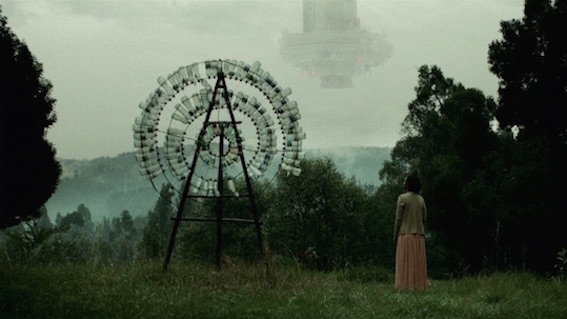
(3) Crumbs (dir. Miguel Llansó)
[Review & interview] My favourite of the films I saw in Barcelona back in April. An inventive epic-adventure-meets-sci-fi-romance and a bittersweet tale of self-acceptance. I would like to revisit the film, not least because I don’t like the review that I wrote at the time (it’s overly descriptive and concentrates on plot at the expense of expanding upon the visual style) but realistically I don’t often have the time to do that. But it is now available to buy or stream from the Indiepix Films website (click here) – I think that the DVD is region 1, but the streaming and permanent download options are available worldwide.
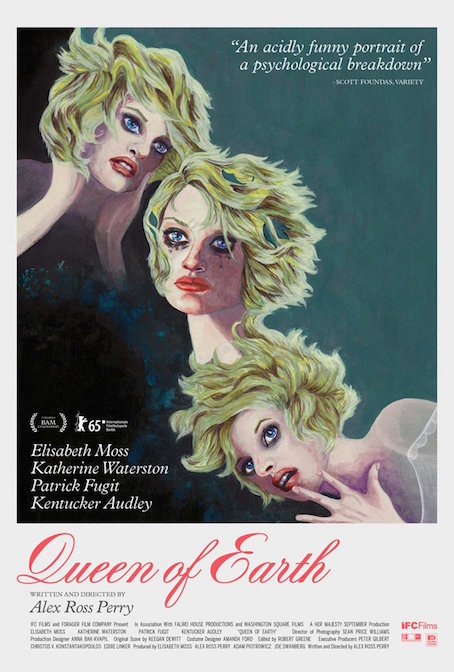
(4) Queen of Earth (dir. Alex Ross Perry)
[Review] The last film that I saw in Barcelona – and as I predicted, a downward spiral into delusion and madness (and an examination of fraught female friendship) was indeed perfect Friday night viewing. I’m hopeful that it will get some kind of UK release in 2016 because the director’s Listen Up, Philip had a release this year and Elisabeth Moss is known here (both she and Katherine Waterston are excellent) – this kind of film should be catnip to independent cinemas, if only they could tear themselves away from programming multiplex fare.

(5) Slow West (dir. John Maclean)
The first of the films on this list to have had a UK theatrical release in 2015. I went in not knowing much about it other than it being a western and that Michael Fassbender and Ben Mendelsohn were in it (the presence of the latter in particular is swiftly becoming a sign that a film will be worth seeing). I came out quietly impressed and the film has stuck with me as the year progressed – I instinctively placed it in pole position for #12filmsaflickering. It manages to use a familiar genre and its symbols in a way that feels fresh – I particularly liked a sequence where Cody Smit-McPhee’s character walks through an ash cloud, turning phantasmal as he goes, and another scene where the forest suddenly comes alive before our eyes…but there are any number of small details that could be singled out. And the coat worn by Mendelsohn’s character looks worthy of its own spin-off prequel (certainly its acquisition would be a tale and a half).

(6) The Duke of Burgundy (dir. Peter Strickland)
A surprisingly funny film and one of such dense and rich imagery that it builds up its own texture, not unlike the velveteen of the butterflies that preoccupy the two protagonists (Sidse Babett Knudsen and Chiara D’Anna). It’s not really a ‘daytime’ film and I had the rather odd experience of having to fit in a screening during my lunch break – but I’m glad that I did because something of its unique atmosphere would probably have been lost if I’d just watched it on VOD, away from the cocoon of a cinema.
The environment in which you first watch a given film inescapably shapes your perception of it – for example, a comedy watched in a full auditorium is a different experience to watching it at home on your own. In general, I would prefer to see a film for the first time in the form it was intended to be seen – on a big screen, with an audience. This brings me back to independent cinemas programming multiplex fare, and the knock-on effect that this has on the opportunities to see smaller films. The programming at my local “independent” has become progressively less diverse over the last few years but it has been particularly noticeable in the last 18 months because they are now regularly assigning their main screen (they have three, plus a gallery space) to films that also have saturation coverage at the multiplex that is ten minutes walk away (they are currently showing the new Star Wars film). The upshot of this is that the kinds of films that used to be their bread and butter are being pushed into the margins – either in the form of single screenings at random times of day (hence my lunchtime jaunt – incidentally, that 11:30am weekday screening in their 2nd-biggest screen was at least 75% full, so I wasn’t the only person who wanted to see it in the right setting) or the gallery screen (full disclosure: I’ve still not seen a film in this screen – I’m sure the sound system is top notch but a 33-seater is not a “cinema” in the form that I want to experience it, and I’m not paying £10 to do so either [the gallery screenings are after 5pm and therefore the full ticket price]). There have been multiple instances this year where films I’d like to have seen (Abel Ferrara’s Pasolini is one that springs to mind) were only shown on a “proper” screen once or twice in total and at times that fell during normal working hours, meaning that I couldn’t go. This only looks set to continue, which is very disappointing because it means that I’m more likely to see a film like Strickland’s on the BFI Player than in a cinema. End of rant.

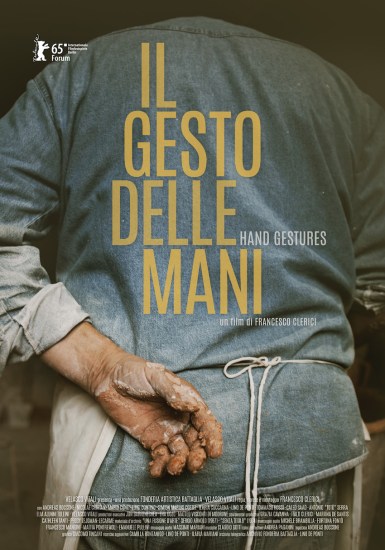
(7) Il gesto delle mani / Hand Gestures (dir. Francesco Clerici)
[Review] I’ve written about this recently, so I don’t have much to add. I do a fair amount of arts and crafts so I’m always interested in seeing artistic processes up close. I like that there’s no voiceover or intertitles explaining what we’re seeing – I became as absorbed in the process as the artisans onscreen were in their craft.

(8) National Gallery (dir. Frederick Wiseman)
I took a day trip to Edinburgh in order to see this (at the point when I booked my train tickets there was no sign of it coming to Newcastle – but it did belatedly arrive two weeks after my trip) because I knew that the artworks would merit being seen on as large a screen as possible. As with Hand Gestures, part of the pleasure to be taken from this film is simply in observing people who excel at their craft. This is a multifaceted exploration of the National Gallery as an institution and how it interprets a remit to give the public the appropriate tools with which to understand art. I particularly liked the demonstrations of how the level of knowledge and passion embodied by the resident experts and specialists opens up their respective subjects to a range of audiences, but also the behind-the-scenes glimpses at conservation and restoration, and the craftsmanship involved in all aspects of the place (e.g. the person who makes the frames). An enthralling documentary – the three hours fly by.

(9) Life May Be (dir. Mark Cousins and Mania Akbari)
This was on the festival circuit last year, but I missed a chance to see it in Edinburgh – luckily it had a VOD release in 2015 (it is available to rent or buy on GooglePlay and iTunes). I mentioned it on here earlier in the year but said that I wanted to watch some of Akbari’s other films before I wrote about it – I haven’t got any further than buying a couple so far, but hopefully it’s a film I’ll return to in 2016. The film is a conversation between the two directors in the form of exchanged video essays / letters and touches on exile, censorship, cultural ideals, gender and bodies. It made my brain fizz.

(10) Aferim! (dir. Radu Jude)
Another of the films that I saw in Gijón. Rather inexplicably this picaresque Western has recently gone straight-to-DVD in the UK – so if you’re in the UK, it is worth tracking down (just wait for the price to drop because it’s unusually expensive). As I said in one of my dispatches from Gijón, ‘it just feels as if you’re in the hands of a director who has something to say and knows how he wants to say it’ – it’s a shame that UK audiences won’t get the chance to see it on the big screen.

(11) P’tit Quinquin (dir. Bruno Dumont)
[Review] The first of Dumont’s films that I’ve seen (and I’m told that it’s atypical of his work, so I may continue swerving the rest), this was probably the most left-of-field film I saw this year – a mishmash of the darkly funny and deeply unsettling, headed by two innately likeable social misfits (played by Bernard Pruvost and Alane Delhaye). Part of what’s unsettling is that these two personable leads espouse views that tend towards the casually racist (Dumont’s depiction of those attitudes is a lot more complicated than it appears on the surface), but also through how it generates humour from the behaviour of a non-professional cast, many of whom have learning difficulties – I occasionally wondered whether I was laughing at the outlandish Capitaine Van der Weyden or the uncontrollable tics of Bernard Pruvost, and the idea that it was the latter made me uncomfortable. It is incredibly funny (see it for the corpsing priests!) but in a way that also throws into relief the sadness of stunted lives and the limited opportunities of those living in the locale. And if you’ve seen it, you already have that song playing in your head.
(12) Enemy (dir. Denis Villeneuve)
The first film that I saw in the cinema in 2015 and one that still keeps creeping around my brain like its Louise Bourgeois-inspired spider. A narrative loop or a nightmarish dream? Either way, Jake Gyllenhaal’s character(s) has ‘woman problems’ in every sense of the term. It’s the kind of film where you’ll pick up on more details each time you watch it – having watched it only once so far, I’m left with more questions than answers because certain things from earlier in the film have to be rethought in light of what happens later. The penultimate shot is one of my favourites of the year.
(13) Obra (dir. Gregorio Graziosi)
[Review] Seen in Barcelona. This has a coincidental visual connection with Enemy insofar as both use architecture – in terms of detail and on a larger scale – to suggest the containment (or hemming-in) of their protagonists. Obra has received mixed reviews elsewhere – its chilly stylishness gets mentioned as a negative, but I think that slightly clinical, geometrical framing is a commentary on the life of the lead character. It’s not a film that sparks passions (it holds the viewer at one remove, as does its protagonist (Irandhir Santos)) but it has stuck with me (I didn’t have to think much about including it in this list) and the opening credit sequence is my favourite of the year. I’ve not seen any sign of it appearing in the UK (or anywhere else for that matter – I don’t know whether the D’A Festival was the end of its festival run?).
(14) Sicario (dir. Denis Villeneuve)
I don’t think I’ve ever had two films by the same director on the same end of year list. As pure cinematic spectacle this takes some beating, and Villeneuve directs the hell out of the material – having just got rid of heartburn that I’d been stuck with almost continually for more than a month, the tension during the bridge scene reignited it. The cinematography and soundtrack (the latter was partly responsible for my heartburn) have been rightfully singled out for praise but what I also liked is that during the action sequences a sense of spatial relations is sustained (and the bridge sequence is a case in point) – you know where people are in relation to each other, and by extension you know which way the camera is facing despite rapid cutting. It cannot be overstated how rare that is in modern action sequences. The trailer seemed to make more of Josh Brolin and Benicio del Toro – to hide the fact that the protagonist (Emily Blunt) is female? – and the film doesn’t go in quite the direction I was expecting (I think I thought it was going to be more of a Platoon-style two-sided battle for the soul of Blunt’s character), and it tails off towards the end. I also know people who find its depiction of Mexico offensive – and I can’t really argue with that, but I also can’t deny that I thoroughly enjoyed watching it. When this gets a DVD release, I’m hoping to also watch Incendies and Prisoners (and rewatch Enemy) and then write something about Villeneuve’s recent output (his earlier films are unavailable in the UK).
(15) Noite sem distância / Night Without Distance (dir. Lois Patiño)
[Review] When you really like a directorial debut, you (or I, at least) approach the director’s next film with a certain sense of trepidation – can they fulfil the promise that you think they’ve demonstrated? Patiño’s Costa da morte / Coast of Death was my favourite film last year by quite a margin and I avoided reading about his three new shorts/installations (the other two are Estratos de la Imagen / Strata of the Image and Sombra Abierta / Open Shadow) prior to seeing this one in relation to Curtocircuito. This is a very different beast to Costa da morte, although it continues the director’s exploration of the Galician landscape. What could have been a gimmick (the image has been flipped into the negative) actually confers a phantasmal layer over proceedings and gives a sense of historical repetition – I would be intrigued to see whether this appears differently on a big screen (I watched it on my laptop).
(16) Hard to be a God (dir. Alexei German)
It’s weird that I should have so many black and white films on my list this year (five, by my count), but maybe people using colour need to up their game because the b&w ones are among the most visually imaginative I’ve seen in 2015. This film should have been in my #12filmsaflickering list because it had a UK release, but because I saw it in Barcelona (it was on limited release in Spain and at that point it didn’t have a UK distributor, so it seemed likely to be my only opportunity to see it on a big screen) it was in amongst festival films in my record of what I’ve watched, and so I overlooked it when I was making that list. Watching a three hour Russian epic with only Spanish subtitles was problematic – there were whole scenes where I didn’t know what was going on, or at least didn’t understand the subtleties because I usually picked up the gist of what was transpiring via the onscreen action – but visually it is something else. The cinema where I saw it – the Zumzeig Cinema, about 30 minutes walk from Plaça de Catalunya (there’s probably a simple metro route but I prefer to get lost above ground, so I went everywhere on foot) – is also admirably diverse in its programming and I hope that I get the chance to go back there sometime in the future.
(17) Dead Slow Ahead (dir. Mauro Herce)
[Review] Another film that I’ve reviewed very recently, so I don’t currently have much to add. I originally watched it on Festival Scope because I didn’t think that it was going to be in Gijón (it was a late addition to the programme) and then got the chance to see it on the big screen on my last night in Spain – something that underlined what a difference it can make to see a film in the cinema because it was a much more immersive experience.
(18) Fidelio, Alice’s Journey (dir. Lucie Borleteau)
[Review] Earlier this year, UK distributor Soda Pictures used 50 members of the public (who had to apply) to choose its next release. I was one of the 50 (I can’t say that it was a particularly satisfying experience) and this was one of the 10 films under consideration – it didn’t ‘win’, but it was my favourite (I was fairly out of sync with the tastes of the group, at least insofar as Soda’s calculation of the final rankings), so I was pleased when it got picked up by New Wave Films for a UK release. There aren’t many films directed by women on this list – that’s a result of what I’ve managed to see this year. Although the gender of a director isn’t really a criteria by which I chose my viewings (any more than I would vote for a politician simply because they were in possession of a uterus – the ideas are the thing!), I prioritise seeing ‘smaller’ films (i.e. the ones that don’t get saturation distribution) and films directed by women almost invariably fall into that category. So in theory I should manage to see a decent number of films by women in a given year, but 2015 didn’t work out like that. What I liked about Borleteau’s directorial debut was that her protagonist (played by Ariane Labed) is positioned as the desiring subject rather than the desired object: that’s fairly rare in onscreen representations. I’ll be interested to see what Borleteau gets up to next, but in the meantime this should get a UK DVD release soon.
(19) Hitchcock / Truffaut (dir. Kent Jones)
This documentary has been picked up by Dogwoof in the UK, so it will be getting a theatrical release in 2016 (it is also already listed for pre-order in their DVD store – here). It is a celebration of cinephilia – that of Hitchcock and Truffaut, and also that of the directors influenced by the 1964 book – and the book itself rendered into audiovisual form. It has made me want to reread the book (it’s probably more than 10 years since I last looked at it) and work my way through Hitchcock’s entire oeuvre – there are still so many of his films that I haven’t seen.
(20) Mission: Impossible – Rogue Nation (dir. Christopher McQuarrie)
Are there many film series that manage to improve as they go along (especially when they’ve gone off the boil along the way)? At times wilfully daft – and with a bit of a meh villain – but with action sequences to set your pulse racing, and the sense that you were watching a precision-made piece of filmmaking, this was one of my most enjoyable trips to the cinema this year. And Rebecca Fergusson came out of nowhere to waltz off with the film.
Honourable mentions (alphabetical, * = short): Abdul & Hamza (dir. Marko Grba Singh) [review], Crimson Peak (dir. Guillermo del Toro) [review], Cuenta con nosotros* (dir. Pablo Vara) [festival report], Hacked Circuit* (dir. Deborah Stratman) [festival report], Inside Out (dir. Pete Docter and Ronnie Del Carmen), Jet Lag (dir. Eloy Domínguez Serén), Krisha (dir. Trey Edward Shults) [festival report], Llévate mis amores / All of Me (dir. Arturo González Villaseñor) [review], El movimiento / The Movement (dir. Benjamín Naishtat), Ni Dios ni Santa María / Neither God Nor Santa María* (dir. Samuel M Delgado and Helena Girón) [review], ReMine: El último movimiento obrero / ReMine: The Last Working Class Movement (dir. Marcos M. Merino), Retratos de identificaçao / Identification Photos (dir. Anita Leandro), Scrapbook* (dir. Mike Hoolboom), Sueñan los androides / Androids Dream (dir. Ion de Sosa) [review], World of Tomorrow* (dir. Don Hertzfeldt).







 Nobody Knows Anybody