Iberodocs 2016

iberodocs_banner

The 3rd edition of Iberodocs takes place in Edinburgh later this week from Wednesday 4th – Sunday 8th and there is plenty in their programme to recommend. Of the films I’ve seen, I’d recommend Llévate mis amores (which was my favourite documentary at last year’s EIFF), O Futebol and No Cow on the Ice – and also the shorts Ser e voltar (which is paired with the latter feature – both are by Galician filmmakers) and Sin Dios ni Santa María (which appears in the main shorts programme) – but I’ve also heard good things about Rio Corgo and Volta à terra, so I think that the festival is pretty jam-packed with things worth seeing. I have previously reviewed (in relation to different festivals) three of the films that are being shown and I have written another three this past weekend. I will add the links below as they are published over at Eye for Film.

These are likely to be my last reviews for a while, but I hope to get back to writing on here regularly.

Review: Ixcanul (Jayro Bustamante, 2015)

Ixcanul_combo

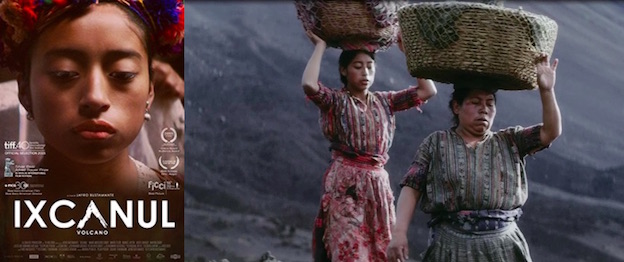
My other ¡Viva!-related review is of Ixcanul / Volcano (Jayro Bustamante, 2015), a female coming-of-age drama set in the Guatemalan highlands. The film had rave reviews on the festival circuit last year (it won a Silver Bear at the Berlinale) but – although it is a well-made film – I wasn’t as taken with it (and if I never have to watch an animal be slaughtered on film again, it will be too soon). My Eye for Film review is here.

Review: Embrace of the Serpent (Ciro Guerra, 2015)

El abrazo de la serpiente

The 2016 edition of the ¡Viva! Spanish and Latin American Festival (I’ve only just noticed as I typed that that they’ve removed ‘film’ from the festival’s title) in Manchester started this weekend – you can see their full line up here.

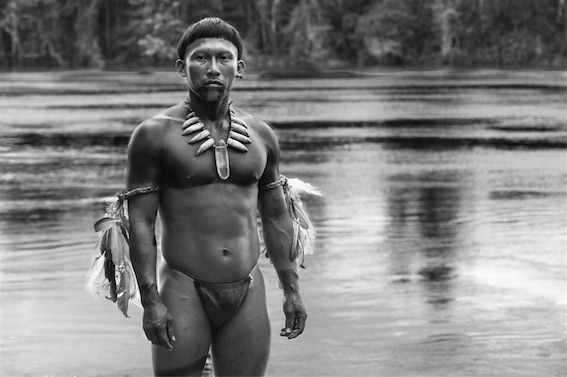
There is nothing in the Spanish side of the programme that interests me, so I’ve reviewed two of the Latin American titles for Eye for Film. First of all, El abrazo de la serpiente / Embrace of the Serpent (Ciro Guerra, 2015), which has certain commonalities with Miguel Gomes’s Tabu (2012) and is an original take on the ‘journey up river / through the jungle’ film. It will actually be released in the UK in the summer and it’s worth catching if it plays near you. My review is here.

Festival Report: AV Festival 2016

Spare Time01

I’ve written a festival report for desistfilm focussing on the AV Festival’s ‘Resistance’ strand, which spanned 80 years of British documentary filmmaking. The report is here.


Reprint: Pablo Larraín’s ‘Chile under Pinochet’ trilogy

This post was originally published on the old blog in November 2013 (Update, August 2017: where I have reprinted something here, I have decided to remove the contents of the original on the old blog and instead leave a link there to the new site (it doesn’t make much sense to have the pieces appear in two places)). Pablo Larraín’s new film, The Club, is released in the UK today (although apparently it’s not reaching my part of the country until the middle of April) – so I thought it was worth revisiting his previous films. The post has mainly been edited so that references to dates make sense but I’ve also simplified a couple of sentences.

I saw No (2012) in the cinema in early 2013. Although I hadn’t yet seen the two earlier films, I realised that No‘s undercurrent of alegría marked it as distinct within Larraín’s trilogy given that all three relate to Chile under Pinochet; No is like the gulp of air taken after you’ve been held under water for too long.
And life under water is shown to have been a grim and dark place. The first film – Tony Manero (2008) – is set in the darkest period of the dictatorship, in around 1977-78. The choice of year seems to have been partly shaped by the fact that Saturday Night Fever was in cinemas at that point – both the extras on the DVD and interviews contemporaneous to the film’s release reveal that the starting point was a photo of a man, which inspired in Larraín the idea of a killer who just wants to dance. In the Q&A on the DVD, Alfredo Castro (who plays Raúl, the man who wants to be ‘the Chilean Tony Manero’ in a TV dance contest) says that when they realised that the Travolta film was released in Chile in that period, they saw that they could draw some interesting parallels between the character’s behaviour and that of the State. Operating in a general atmosphere of fear and the absence of morality, Raúl doesn’t see why he shouldn’t always get his own way – so he kills in order to fulfil his dancing dream. Abhorrent as Raúl is, and despite the absurdity of his behaviour being in pursuit of the chance to win a TV lookalike / dance contest (Jonathan Romney talks of the first two films’ ‘grotesque absurdism’ (2013: 28)), the film’s occasional jet-black humour (not so much the banality of evil as the mundanity that underpins Raúl’s singleminded attention to detail in his quest to ‘be’ Tony Manero – “Two buttons?”) is undercut by the intrusion of the dangerous reality (police raids and a background undercurrent of the simmering threat of violence).

Tony Manero

Alfredo Castro is the reason I wanted to write about the films because he turns in extraordinary and completely transformative performances both in Tony Manero and Post Mortem (he takes a supporting role in No). I don’t know why – having focussed on actors for a long time in my research – but I am still surprised when an actor turns out to be completely unlike how he appears onscreen in a given film. Castro appears in the DVD Q&A, looking not just younger and more animated, but positively rejuvenated in comparison to his appearance as the pasty and almost-jaundiced Raúl. I’ve been trying to decide whether he should be described as vulpine or vulture-like (he is frequently shown in profile, drawing attention to a prominent nose) – Raúl both scents danger (he often surreptitiously observes acts of violence being carried out by others) and also circles around in the aftermath (whether relieving an unconscious man of his watch and jewellery or faking a good samaritan act with an old lady). Castro’s performance is a composition of costume (the suit) and body language, alternating between the peacock-like strut on the dancefloor and scurrying rat-like run with which Raúl makes his way around the city (he has an in-built sensor for the approach of bigger animals – he’s frequently seen hiding in doorways or behind mounds of rubble as either the military or the police patrol the area). I found it interesting that his focus is on Tony Manero, the character, rather than John Travolta, the actor (Raúl walks out of a screening of Grease with a look of incomprehension). Castro says in the Q&A that although they knew the character would be a dancer, they wanted to avoid the ‘perfect’ style of American musicals. The dancing in Saturday Night Fever is athletic rather than elegant, and perhaps more importantly is also relatable to Raúl’s social class and to the street. The restraint of Castro’s performance is made clear in the two instances when emotion floods Raúl’s face: being moved to tears in the cinema, watching Saturday Night Fever; and when he is applauded after his TV performance (his reaction here doesn’t happen after the applause at the earlier lodging-house show). On both occasions he is transformed before our eyes.

Post Mortem

The second film, Post Mortem (2010), moves further back in time to September 1973 and the military coup. It is a quietly unsettling film, and very different stylistically to the other two films. The theme (or sense) of surveillance runs through all three films – the handheld camera work in Tony Manero suggests a city under constant watch, while in No it evokes the intimidation of the security forces. Post Mortem‘s very elegant and formal framing is closer to voyeurism, indicated in our introduction to Mario (Castro) where he is standing in front of his main window, waiting for his showgirl neighbour Nancy (Antonia Zegers – luminously fragile but also playing Nancy as narcissistic and flaky enough to truly be a danger to others) to arrive home. The idea of a window is maintained by the letterbox framing throughout the film, which also suggests a restricted view: things frequently happen just out of shot (I had headphones on when I was watching it and the sound is also frequently positioned to the side or somewhere behind you), below the frame. One example is the way that Mario (and the viewer) misses the raid on Nancy’s house (we hear explosions and shouting) because Mario is looking away from the window while he is in the shower and the camera stays on him (observing him through the window). But this is also possibly a comment on people deliberately not looking – averting their eyes to an unpalatable reality (and trying to avoid being seen themselves).
Mario is a grey creature, Castro’s wolfishness from Tony Manero completely gone, his face hidden behind a curtain of light grey hair, and much like one of the cadavers whose post-mortems he records for the pathologist; he is one of the walking dead. But he is also attempting to be invisible, to get along, and not draw attention to himself – something that his apparently already deadened nature helps him with. In contrast, his female colleague (Sandra – Amparo Noguera, who played Raúl’s girlfriend in Tony Manero), although presented in an equally pallid palette of colours (costume, but also her complexion) cannot inure herself to the piles of corpses that start to stack up as the military coup unfolds; I didn’t take this to be a representation of the ‘hysterical female’, but rather someone who is fervently trying to cling to what she believes in and what she ‘knows’ in the face of obstruction, obfuscation, and denial. One gets the sense early on that this story is not going to end well, and the final wordless sequence silently foretells the horrors that were still to come for Chile in the aftermath of the coup.
Many of the same actors (Castro, Zegers, Noguera, and others) appear in all three films, but in No Gael García Bernal comes centre stage as advertising whizz-kid René Saavedra, the strategist behind the ‘No’ campaign in the referendum that would finally oust Pinochet. The choice of lead perhaps speaks to the representation of a younger generation, hope and alegría on the way, but the Mexican actor also brings with him a measure of ambiguity that suits the character; we are never really sure whether René believes in the ‘No’ cause or simply likes a challenge and views democracy as another product to sell (something suggested by his using the same lines when he introduces the first referendum piece as when he introduces the advertising promos for a soft drink (at the start of the film) or a new telenovela (at the end of the film)). Either way, his youthfulness fits with the aesthetic of the film – utilising U-matic film so as to be able to seamlessly blend archival footage into the film (about 30% of the film is archival footage according to a Larraín interview on the DVD – they called up the people who appeared in the original ‘No’ campaign and use them to play themselves, so that on the monitors the original footage shows their younger selves while they appear within the film itself as they are now, 24 years on, ‘history […] written on their bodies’ in Larraín’s words) – the video ‘feel’ of the footage and naturalistic lighting (lens flares and all) suggesting youthful adventure and moments caught on the hoof (not unlike the way the ‘No’ campaign itself was shot).

No

Alfredo Castro again transforms himself, here playing René’s lizard-like employer, an advertising executive who sides with the ‘Yes’ campaign (eventually taking it over in response to what the ‘No’ team manage to pull together) but who nonetheless recognises talent and engages in a cat-and-mouse provocation with the younger man. The back-and-forth between Lucho (Castro) and René, an almost affectionate bickering that has an undercurrent of real threat to it, and Lucho’s private talks with the Prime Minister (Jaime Vadell, who played the main pathologist in Post Mortem), provide much of the film’s humour (in addition to some of the absurdities of the world of advertising, and small touches such as the cleaner at the ‘Yes’ headquarters frequently whistling the ‘No’ campaign’s jingle); the lighthearted tone of the film mirrors the ‘No’ campaign’s ‘Happiness is coming’ sunny representations, in sharp contrast to the earlier two films. However the film still points to the darkness beyond that sunniness, whether in witness testimony about the disappeared, the State’s surveillance and attempted intimidation of the ‘No’ participants, or the cacophonous range of political opinions among the opposition. The latter includes René’s radical estranged wife (Zegers) who tells him that in taking up the challenge, he is playing by Pinochet’s rules and by extension validating what many on the Left thought would be a rigged outcome. Although the end of No is ambiguous (Larraín is quite pragmatic about the limitations of what was achieved and what Pinochet’s lasting legacy for his country was – see the interviews on the DVD), my lasting memory of the film from my first viewing was of sunshine. The trilogy goes out on a euphoric high.


Reviews: AV Festival 2016

The AV Festival runs from 27th February – 27th March. That’s an unusually long runtime for a festival but there are events and screenings spread throughout that whole month, so my reviews will be appearing over the same time period. That said, quite a lot of the films being shown are ones that I either own on DVD or can access via VOD (for a lower price than a cinema ticket), so I’m currently attempting to get a head start on my reviews by watching those films at home. I’m aiming to review 20 films overall, some of which are screening during the last weekend of the festival so I will add titles and links to this post as and when the reviews go online. The first batches of reviews are for collections of shorts but almost all of the rest will be standalone features.

British Doc shorts

1930s – 40s British Documentary Movement –

Showing as part of the ‘Resistance: British Documentary Film’ strand, this collection of four shorts from the 1930s and 40s picks up on some of the same issues raised by George Orwell in The Road to Wigan Pier – namely poor housing conditions and precarious employment in industrial areas. According to the festival’s website, the screening at the Tyneside Cinema on 1st March will show them on 35mm – I watched them on the BFI’s 4-disc boxset, Land of Promise.


Jennings_Finest Hour

Finest Hour: Films by Humphrey Jennings –

Jennings is perhaps the best-known name among the British documentary makers of the era and is rightly revered for his poetic artistry. What I’ve liked most though is his eye for the small details – often moments of happenstance – that have the spark of real life rather than something stiltedly staged (or self-consciously presented) for the camera. Some of his films are in the Land of Promise boxset – and the BFI also has three volumes of DVDs dedicated to the director – but several of them (indicated below) are also available to watch for free on the BFI Player.


A Dream from the Bath01

Between Times: Marc Karlin –

On the weekend of Friday 4th – Sunday 6th March, AV Festival are focussing on director Marc Karlin (details here) who spent several decades as a filmmaker consistently questioning and critiquing the British Left. I will only manage to see a couple of his films during the festival, but almost all of the films that are being screened (including the five on Nicaragua) are also available to rent on Vimeo courtesy of the Marc Karlin Archive (here) – I’m certainly planning to investigate his other works.


Nightcleaners01

Nightcleaners 

This documentary about the 1970-72 campaign to unionise the cleaners who worked overnight in London office blocks was screened on International Women’s Day. I didn’t have time to write about it until two days later, by which time I felt that something of its quicksilver and abstract nature had already slipped beyond my grasp. It is by no means ‘difficult’ viewing (I hadn’t been sure what to expect – it caused a stir in academic circles at the time of its original release and a lot of the contemporaneous writing about it seems to verge on the incomprehensible) but it is a film of many layers. It is also the best film I’ve seen so far this year.


Revue01

Levels of Democracy: Ukrainian Film Weekend

This weekend (18th-20th March) the AV Festival is focussing on radical Ukrainian documentary. Within that context they are creating a profile of Sergei Loznitsa by screening three of his films – his latest, The Event (2015), as well as Maidan (2014) and Revue (2008). I was supposed to be seeing The Event and two classics from the silent era – Earth (Alexander Dovzhenko, 1930) and Enthusiasm (Symphony of the Donbas) (Dziga Vertov, 1930) – but that is not how my weekend has turned out, so there will only be my review of Revue (available on DVD in a set with his films Blockade and Landscape, which is how I saw it) for this section of the festival. If you’re interested in Loznitsa, Maidan is also available on DVD and the majority of his other documentaries are available as VOD on the Doc Alliance site (note: I wasn’t overly fussed by Revue but I like some of his other films considerably more).

  • Revue (Sergei Loznitsa, 2008)


Refuge England01

March to Aldermaston: Free Cinema

As part of the ‘Resistance: British Documentary Film’ strand, the festival is screening a showcase of shorts from the Free Cinema movement – March to Aldermaston (Lindsay Anderson, 1959), Refuge England (Robert Vas, 1959), and We Are the Lambeth Boys (Karel Reisz, 1959). The latter two are available to watch for free on the BFI Player – here and here respectively.

That’s it from me in terms of AV Festival reviews. My report on the British documentary section will appear after Easter.

Preview: AV Festival 2016

AV Festival_theme

“Meanwhile, what about Socialism? It hardly needs pointing out that at this moment we are in a very serious mess, so serious that even the dullest-witted people find it difficult to remain unaware of it. We are living in a world in which nobody is free, in which hardly anybody is secure, in which it is impossible to be honest and remain alive.” – George Orwell, The Road to Wigan Pier (1937)

I’ve written a preview of the forthcoming AV Festival 2016 over at Eye for Film. The festival takes George Orwell’s The Road to Wigan Pier (1937) as its thematic inspiration, asking “Meanwhile, what about Socialism?”. As I explain within the preview, AV Festival 2016 is billed as ‘Part 1’ in relation to Orwell’s book (which is divided into two parts) with ‘Part 2’ intended to arrive in two year’s time in the form of the festival’s 2018 edition (it’s a biennial festival). I read the book last month and was startled by how much of what Orwell observed and criticised in the late-1930s is still with us in 2016 – it is well worth reading. I’m looking forward to discovering how the festival has interpreted it, not least because I’ve hardly seen anything that they’ve programmed.

Eye for Film have also made a page with the full film listings of the festival – you can see that there is a lot of variety arranged around three themed weekends. I’ll be seeing a bit of everything, including several of the films at the last of those weekends – Levels of Democracy: Ukraine Film Weekend – but my main focus will be the British documentary strand, which is woven throughout the programme over the course of the whole month. I’m also hoping to get to some of the exhibitions and installations that will be at various locations around the city. You can find the full details on the festival’s website – here.

Due to the timescale over which the festival is spread, I will manage to review / write about more individual films than I normally get the chance to at a single festival. I’ll be writing reviews for Eye for Film and a report on the British documentaries for desistfilm. My reviews are already starting to appear, so I will make a separate post tomorrow for the various links.


More Favourites of 2015: Old, but new to me

Essentially these are my favourite first-time viewings from this year that don’t fit within the 2014/2015 rule that I set for my main list. Some of them – Leviathan and Nostalgia de la luz – are films that I’ve finally caught up with (several years after everyone else), some – El ángel exterminador and Bodas de sangre – were films (that I should have already seen) watched as background viewing in relation to something else but that ended up capturing my attention, and others – Macario and Eden Valley – were part of retrospectives (the Focus on Mexico at EIFF and the ‘For Ever Amber‘ film and photography retro that took place at the Tyneside Cinema and Laing Art Gallery in Newcastle respectively (if the photography exhibition from the latter travels elsewhere, I highly recommend it – I visited it several times)). As ever, I also have quite a large pile of DVDs that I want to catch up with, and in terms of reissues of older films these include several of Second Run’s releases from the past year, El mundo sigue / Life Goes On (Fernando Fernán Gómez, 1965) [reissued in Spain for its 50th Anniversary], more of the Carlos Saura films (honest), plus – inspired by having almost physically walked straight into him while he was shooting his new film on Northumberland Street in Newcastle – I’ve also picked up several Ken Loach films (including Black Jack, Looks and Smiles and Fatherland) that I’ve not seen before.
But here are some of my older favourites watched during 2015…

Macario_2

(1) Macario (Roberto Gavaldón, 1960)
[Review] I didn’t know anything about this one before seeing it at the Edinburgh Film Festival back in June but it ended up being my favourite screening of the festival. A cinematic version of magic realism, Gavaldón’s 18th century-set film manages to be fable-like but also surprisingly modern and funny. Gabriel Figueroa’s cinematography is beautiful and the image of a sea of candles representing the whole of humanity is one that I’ll remember for a very long time.

Taking of Pelham

(2) The Taking of Pelham One Two Three (Joseph Sargent, 1974)
Another of the retrospective screenings at EIFF and my other main favourite from the festival. An obvious influence on many subsequent films (as well as being the source of Tarantino’s colourful pseudonyms in Reservoir Dogs) and genuinely edge-of-seat stuff in several key sequences. In Robert Shaw the film has a villain who is utterly committed to his cause and who has a cynical and clear-eyed view on how the authorities will respond. A few dead bodies along the way really doesn’t bother him, which creates a real sense of jeopardy for the nameless hostages – and the fact that we don’t know the real names of anyone on the train (hostage or hostage-taker) means that it’s difficult to gauge who will survive. It’s surprisingly funny (perhaps that should be expected with Walter Matthau in the lead role but it’s too violent to be a straightforward comedy) not least because of how humour is repeatedly used to undercut tension (when the action / standoff gets too nerve-wracking) or undermine pomposity (basically any scenes involving the Mayor). But it’s also used to show up some of Zachary Garber’s (Matthau) more boorish behaviour (as in the reveal that the Japanese visitors understand English perfectly – Garber has the grace to look embarrassed at that point). And Matthau is just perfect.

the-exterminating-angel

(3) El ángel exterminador / The Exterminating Angel (Luis Buñuel, 1962)
Yes, I should have seen this before now. I will make an effort to fill in some of the other gaps (or, more accurately, yawning chasms) in my Buñuel viewings in the coming year.

Bodas de sangre

(4) Bodas de sangre / Blood Wedding (Carlos Saura, 1981)
I watched this (without taking notes, which is why I didn’t write it up as part of the Carlos Saura Challenge) because I thought that I would manage to see La Novia (Paula Ortiz, 2015) in Gijón and they’re based on the same Lorca play. Short version: I didn’t see Ortiz’s film. Longer version: I was very taken with Saura’s interpretation, which picks up several of his long-running themes – such as a theatrical ‘reality’ and the idea of performing the self (the sequence from which the above image is taken is a fascinating one because the lines between Gades-the-person, Gades-the-performer, and the role he plays within the production blur before our eyes as he breaks the fourth wall while looking in the mirror applying his performance make-up) – and combines them with Antonio Gades’s choreography to tell Lorca’s story through dance. One that I will revisit as part of CSC – and hopefully I’ll manage to re-kickstart the challenge because I let it go in 2015.

Leviathan

(5) Leviathan (Lucien Castaing-Taylor and Verena Paravel, 2013)
It was starting to get embarrassing that I hadn’t seen this – and I’m sorry that I haven’t managed to see it in a cinema because it is visually astounding. I had been put off by a trailer that gave me the impression that I’d end up with motion sickness, but that wasn’t as pronounced within the film itself (although that’s possibly because I watched it on a small screen). It’s not often that you can say that a film contains sights that you’ve never seen before, but that is the case here – some of it just seems…primordial. I was frequently left wondering “How in the hell did they film that?”. I don’t have my copy to hand, so can’t take a screenshot of my favourite sequences but the birds at night is one standout, as are several of the underwater images.


Avant petalos grillados_06

Honourable mentions (alphabetical, * = short): Avant pétalos grillados* (Velasco Broca, 2007) [review] (viewable for free online – no subs but there are only a couple of spoken lines right at the start), The Belovs (Victor Kossakovsky, 1992) [available as VOD at Doc Alliance], Branka* (Mikel Zatarian, 2013) (I wrote about it briefly in this post) [viewable online for free at Márgenes], The Driver (Walter Hill, 1978), Eden Valley (Amber Production Team, 1994) [available to buy on DVD from Amber Films], The Leopard Man (Jacques Tourneur, 1943), Nostalgia de la luz / Nostalgia for the Light (Patricio Guzman, 2010).

My 20 Favourite Films of 2015

Twelve months, five notebooks and approximately 312 films later (141 features and 171 shorts, according to what I’ve written in those five notebooks), this is how I saw 2015. On the old site my end-of-year lists focussed exclusively on Spanish cinema, but given that my intention with this new incarnation is to write about a more diverse range of cinema(s) it seems appropriate for my first end-of-year post here to reflect that. So this is my top 20 based on my viewings (in whatever format) throughout 2015. However, I have stuck to my previous rule that in order to be included, the film has to be from either this year or the previous one (2015 or 2014 in this instance) because it’s still the case that some titles take a while to arrive in the UK, but I want the list to be ‘new’ titles – I might post a separate list (old, but new to me) for films that don’t fit that criteria, if I have time (UPDATE: now online). I have already submitted Top 10s to #12filmsaflickering (you can see my ballot paper in a tweet by the poll’s organiser) and desistfilm (not online yet UPDATE: now online), but the former was restricted to UK releases only and the latter could include retrospective screenings – so my selection here is different. Apart from several titles seen in Gijón – and I’m conscious that having experienced them recently may have elevated some of them in my deliberations just because they are fresh in my mind – the list skews towards the first two thirds of the year because (apart from Gijón) I’ve not been to the cinema much in the last few months.
I went to fewer film festivals this year (just four – D’A Festival in Barcelona, Edinburgh, Berwick, and Gijón) but I was away for more days overall than last year and two of the festivals were outside the UK, so I feel like I still saw a broader range of films than if I had simply stuck to films with a UK theatrical release. I also reviewed a lot of films via screeners/streaming for festivals that I couldn’t travel to, which isn’t ideal but it’s another way of broadening my viewing habits. That said, there are a pile of ‘significant’ films that I’ve not managed to see yet. Some of them I already have copies of but I just didn’t have the time this month to try and catch up with them – and it seems a bit false to try and shoehorn in new films right at the end of the year. But films that I’d like to catch up with over the coming months include (in alphabetical order): 45 Years (dir. Andrew Haigh), Amour Fou (dir. Jessica Hausner), Best of Enemies (dir. Morgan Neville and Robert Gordon), Black Coal, Thin Ice (dir. Diao Yinan), Carol (dir. Todd Haynes), Girlhood (dir. Céline Sciamma), Güeros (dir. Alonso Ruizpalacios), Jauja (dir. Lisandro Alonso), Magical Girl (dir. Carlos Vermut), Maidan (dir. Sergei Loznitsa), Negociador / Negotiator (dir. Borja Cobeaga), Phoenix (dir. Christian Petzold), and Shaun the Sheep (dir. Mark Burton and Richard Starzak). The two films [there are others on my radar, but these are the two that I’m impatient to see] from 2015 that I would most like to see in a cinema in 2016 are La academia de las musas / The Academy of Muses (dir. Jose Luis Guerin) (which I’m hoping will at least make it to UK festivals) and Son of Saul (László Nemes) (which has a UK distributor).

But anyway, on to the films that I have seen this year…

a still from Risttuules/In the Crosswind

(1) Risttuules / In the Crosswind (dir. Martti Helde)
As I’ve said above, I’m wary of placing the films that I’ve seen most recently in end of year lists, but I think that even if I’d seen this film last January it would still be my film of the year – it is a genuine tour-de-force of a directorial debut and a film that continues to resonate in my mind more than a month after I saw it. It falls into that category of film where I would be cautious of rewatching it (on DVD, at least) because I wouldn’t want to diminish the out-of-nowhere impact that it had on me the first time. I wrote about it briefly in this report for desistfilm.

a still from essay film Transatlantique

(2) Transatlantique (dir. Félix Dufour-Laperrière)
a.k.a. the film that took me to Gijón. I initially encountered the film in the EIFF catalogue but wasn’t there on the day that it screened. So I first watched this black and white, dialogue-free documentary / essay film about a transatlantic voyage on the small screen of my laptop back in June, and then had the opportunity to see its dreamy poeticism writ large across the big screen last month in Spain. It is cinema as experience – you are placed inside a defined space and a self-contained world – and an exploration of the sublime. I don’t imagine that it will travel beyond festivals, so take any opportunity to see it that presents itself.
a still from Crumbs

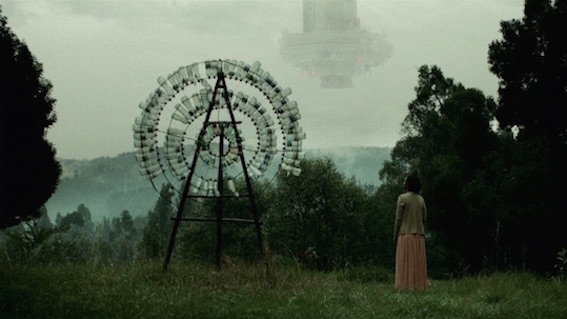
(3) Crumbs (dir. Miguel Llansó)
[Review & interview] My favourite of the films I saw in Barcelona back in April. An inventive epic-adventure-meets-sci-fi-romance and a bittersweet tale of self-acceptance. I would like to revisit the film, not least because I don’t like the review that I wrote at the time (it’s overly descriptive and concentrates on plot at the expense of expanding upon the visual style) but realistically I don’t often have the time to do that. But it is now available to buy or stream from the Indiepix Films website (click here) – I think that the DVD is region 1, but the streaming and permanent download options are available worldwide.
the poster for Queen of Earth

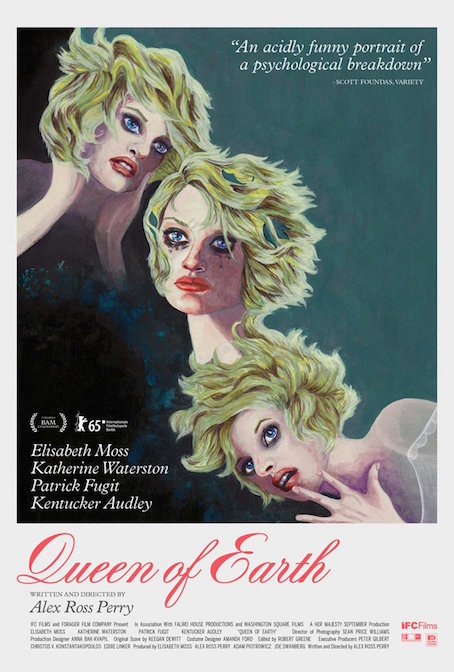
(4) Queen of Earth (dir. Alex Ross Perry)
[Review] The last film that I saw in Barcelona – and as I predicted, a downward spiral into delusion and madness (and an examination of fraught female friendship) was indeed perfect Friday night viewing. I’m hopeful that it will get some kind of UK release in 2016 because the director’s Listen Up, Philip had a release this year and Elisabeth Moss is known here (both she and Katherine Waterston are excellent) – this kind of film should be catnip to independent cinemas, if only they could tear themselves away from programming multiplex fare.

Slow West film poster

(5) Slow West (dir. John Maclean)
The first of the films on this list to have had a UK theatrical release in 2015. I went in not knowing much about it other than it being a western and that Michael Fassbender and Ben Mendelsohn were in it (the presence of the latter in particular is swiftly becoming a sign that a film will be worth seeing). I came out quietly impressed and the film has stuck with me as the year progressed – I instinctively placed it in pole position for #12filmsaflickering. It manages to use a familiar genre and its symbols in a way that feels fresh – I particularly liked a sequence where Cody Smit-McPhee’s character walks through an ash cloud, turning phantasmal as he goes, and another scene where the forest suddenly comes alive before our eyes…but there are any number of small details that could be singled out. And the coat worn by Mendelsohn’s character looks worthy of its own spin-off prequel (certainly its acquisition would be a tale and a half).

The Duke of Burgundy

(6) The Duke of Burgundy (dir. Peter Strickland)
A surprisingly funny film and one of such dense and rich imagery that it builds up its own texture, not unlike the velveteen of the butterflies that preoccupy the two protagonists (Sidse Babett Knudsen and Chiara D’Anna). It’s not really a ‘daytime’ film and I had the rather odd experience of having to fit in a screening during my lunch break – but I’m glad that I did because something of its unique atmosphere would probably have been lost if I’d just watched it on VOD, away from the cocoon of a cinema.
The environment in which you first watch a given film inescapably shapes your perception of it – for example, a comedy watched in a full auditorium is a different experience to watching it at home on your own. In general, I would prefer to see a film for the first time in the form it was intended to be seen – on a big screen, with an audience. This brings me back to independent cinemas programming multiplex fare, and the knock-on effect that this has on the opportunities to see smaller films. The programming at my local “independent” has become progressively less diverse over the last few years but it has been particularly noticeable in the last 18 months because they are now regularly assigning their main screen (they have three, plus a gallery space) to films that also have saturation coverage at the multiplex that is ten minutes walk away (they are currently showing the new Star Wars film). The upshot of this is that the kinds of films that used to be their bread and butter are being pushed into the margins – either in the form of single screenings at random times of day (hence my lunchtime jaunt – incidentally, that 11:30am weekday screening in their 2nd-biggest screen was at least 75% full, so I wasn’t the only person who wanted to see it in the right setting) or the gallery screen (full disclosure: I’ve still not seen a film in this screen – I’m sure the sound system is top notch but a 33-seater is not a “cinema” in the form that I want to experience it, and I’m not paying £10 to do so either [the gallery screenings are after 5pm and therefore the full ticket price]). There have been multiple instances this year where films I’d like to have seen (Abel Ferrara’s Pasolini is one that springs to mind) were only shown on a “proper” screen once or twice in total and at times that fell during normal working hours, meaning that I couldn’t go. This only looks set to continue, which is very disappointing because it means that I’m more likely to see a film like Strickland’s on the BFI Player than in a cinema. End of rant.

an image from the documentary Hand Gestures

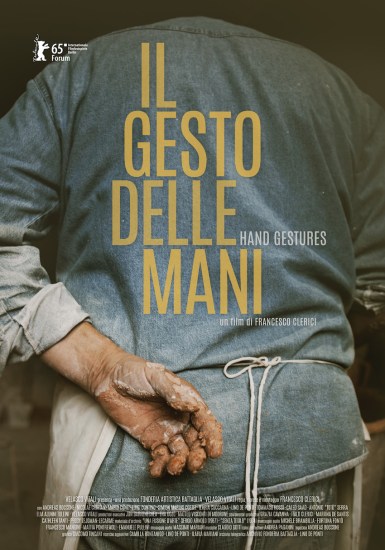
(7) Il gesto delle mani / Hand Gestures (dir. Francesco Clerici)
[Review] I’ve written about this recently, so I don’t have much to add. I do a fair amount of arts and crafts so I’m always interested in seeing artistic processes up close. I like that there’s no voiceover or intertitles explaining what we’re seeing – I became as absorbed in the process as the artisans onscreen were in their craft.

the poster for Frederick Wiseman's National Gallery

(8) National Gallery (dir. Frederick Wiseman)
I took a day trip to Edinburgh in order to see this (at the point when I booked my train tickets there was no sign of it coming to Newcastle – but it did belatedly arrive two weeks after my trip) because I knew that the artworks would merit being seen on as large a screen as possible. As with Hand Gestures, part of the pleasure to be taken from this film is simply in observing people who excel at their craft. This is a multifaceted exploration of the National Gallery as an institution and how it interprets a remit to give the public the appropriate tools with which to understand art. I particularly liked the demonstrations of how the level of knowledge and passion embodied by the resident experts and specialists opens up their respective subjects to a range of audiences, but also the behind-the-scenes glimpses at conservation and restoration, and the craftsmanship involved in all aspects of the place (e.g. the person who makes the frames). An enthralling documentary – the three hours fly by.

an image from essay film Life May Be

(9) Life May Be (dir. Mark Cousins and Mania Akbari)
This was on the festival circuit last year, but I missed a chance to see it in Edinburgh – luckily it had a VOD release in 2015 (it is available to rent or buy on GooglePlay and iTunes). I mentioned it on here earlier in the year but said that I wanted to watch some of Akbari’s other films before I wrote about it – I haven’t got any further than buying a couple so far, but hopefully it’s a film I’ll return to in 2016. The film is a conversation between the two directors in the form of exchanged video essays / letters and touches on exile, censorship, cultural ideals, gender and bodies. It made my brain fizz.

an image from Aferim!

(10) Aferim! (dir. Radu Jude)
Another of the films that I saw in Gijón. Rather inexplicably this picaresque Western has recently gone straight-to-DVD in the UK – so if you’re in the UK, it is worth tracking down (just wait for the price to drop because it’s unusually expensive). As I said in one of my dispatches from Gijón, ‘it just feels as if you’re in the hands of a director who has something to say and knows how he wants to say it’ – it’s a shame that UK audiences won’t get the chance to see it on the big screen.

the posters for films 11 to 20 in my top 20

(11) P’tit Quinquin (dir. Bruno Dumont)
[Review] The first of Dumont’s films that I’ve seen (and I’m told that it’s atypical of his work, so I may continue swerving the rest), this was probably the most left-of-field film I saw this year – a mishmash of the darkly funny and deeply unsettling, headed by two innately likeable social misfits (played by Bernard Pruvost and Alane Delhaye). Part of what’s unsettling is that these two personable leads espouse views that tend towards the casually racist (Dumont’s depiction of those attitudes is a lot more complicated than it appears on the surface), but also through how it generates humour from the behaviour of a non-professional cast, many of whom have learning difficulties – I occasionally wondered whether I was laughing at the outlandish Capitaine Van der Weyden or the uncontrollable tics of Bernard Pruvost, and the idea that it was the latter made me uncomfortable. It is incredibly funny (see it for the corpsing priests!) but in a way that also throws into relief the sadness of stunted lives and the limited opportunities of those living in the locale. And if you’ve seen it, you already have that song playing in your head.

(12) Enemy (dir. Denis Villeneuve)
The first film that I saw in the cinema in 2015 and one that still keeps creeping around my brain like its Louise Bourgeois-inspired spider. A narrative loop or a nightmarish dream? Either way, Jake Gyllenhaal’s character(s) has ‘woman problems’ in every sense of the term. It’s the kind of film where you’ll pick up on more details each time you watch it – having watched it only once so far, I’m left with more questions than answers because certain things from earlier in the film have to be rethought in light of what happens later. The penultimate shot is one of my favourites of the year.

(13) Obra (dir. Gregorio Graziosi)
[Review] Seen in Barcelona. This has a coincidental visual connection with Enemy insofar as both use architecture – in terms of detail and on a larger scale – to suggest the containment (or hemming-in) of their protagonists. Obra has received mixed reviews elsewhere – its chilly stylishness gets mentioned as a negative, but I think that slightly clinical, geometrical framing is a commentary on the life of the lead character. It’s not a film that sparks passions (it holds the viewer at one remove, as does its protagonist (Irandhir Santos)) but it has stuck with me (I didn’t have to think much about including it in this list) and the opening credit sequence is my favourite of the year. I’ve not seen any sign of it appearing in the UK (or anywhere else for that matter – I don’t know whether the D’A Festival was the end of its festival run?).

(14) Sicario (dir. Denis Villeneuve)
I don’t think I’ve ever had two films by the same director on the same end of year list. As pure cinematic spectacle this takes some beating, and Villeneuve directs the hell out of the material – having just got rid of heartburn that I’d been stuck with almost continually for more than a month, the tension during the bridge scene reignited it. The cinematography and soundtrack (the latter was partly responsible for my heartburn) have been rightfully singled out for praise but what I also liked is that during the action sequences a sense of spatial relations is sustained (and the bridge sequence is a case in point) – you know where people are in relation to each other, and by extension you know which way the camera is facing despite rapid cutting. It cannot be overstated how rare that is in modern action sequences. The trailer seemed to make more of Josh Brolin and Benicio del Toro – to hide the fact that the protagonist (Emily Blunt) is female? – and the film doesn’t go in quite the direction I was expecting (I think I thought it was going to be more of a Platoon-style two-sided battle for the soul of Blunt’s character), and it tails off towards the end. I also know people who find its depiction of Mexico offensive – and I can’t really argue with that, but I also can’t deny that I thoroughly enjoyed watching it. When this gets a DVD release, I’m hoping to also watch Incendies and Prisoners (and rewatch Enemy) and then write something about Villeneuve’s recent output (his earlier films are unavailable in the UK).

(15) Noite sem distância / Night Without Distance (dir. Lois Patiño)
[Review] When you really like a directorial debut, you (or I, at least) approach the director’s next film with a certain sense of trepidation – can they fulfil the promise that you think they’ve demonstrated? Patiño’s Costa da morte / Coast of Death was my favourite film last year by quite a margin and I avoided reading about his three new shorts/installations (the other two are Estratos de la Imagen / Strata of the Image and Sombra Abierta / Open Shadow) prior to seeing this one in relation to Curtocircuito. This is a very different beast to Costa da morte, although it continues the director’s exploration of the Galician landscape. What could have been a gimmick (the image has been flipped into the negative) actually confers a phantasmal layer over proceedings and gives a sense of historical repetition – I would be intrigued to see whether this appears differently on a big screen (I watched it on my laptop).

(16) Hard to be a God (dir. Alexei German)
It’s weird that I should have so many black and white films on my list this year (five, by my count), but maybe people using colour need to up their game because the b&w ones are among the most visually imaginative I’ve seen in 2015. This film should have been in my #12filmsaflickering list because it had a UK release, but because I saw it in Barcelona (it was on limited release in Spain and at that point it didn’t have a UK distributor, so it seemed likely to be my only opportunity to see it on a big screen) it was in amongst festival films in my record of what I’ve watched, and so I overlooked it when I was making that list. Watching a three hour Russian epic with only Spanish subtitles was problematic – there were whole scenes where I didn’t know what was going on, or at least didn’t understand the subtleties because I usually picked up the gist of what was transpiring via the onscreen action – but visually it is something else. The cinema where I saw it – the Zumzeig Cinema, about 30 minutes walk from Plaça de Catalunya (there’s probably a simple metro route but I prefer to get lost above ground, so I went everywhere on foot) – is also admirably diverse in its programming and I hope that I get the chance to go back there sometime in the future.

(17) Dead Slow Ahead (dir. Mauro Herce)
[Review] Another film that I’ve reviewed very recently, so I don’t currently have much to add. I originally watched it on Festival Scope because I didn’t think that it was going to be in Gijón (it was a late addition to the programme) and then got the chance to see it on the big screen on my last night in Spain – something that underlined what a difference it can make to see a film in the cinema because it was a much more immersive experience.

(18) Fidelio, Alice’s Journey (dir. Lucie Borleteau)
[Review] Earlier this year, UK distributor Soda Pictures used 50 members of the public (who had to apply) to choose its next release. I was one of the 50 (I can’t say that it was a particularly satisfying experience) and this was one of the 10 films under consideration – it didn’t ‘win’, but it was my favourite (I was fairly out of sync with the tastes of the group, at least insofar as Soda’s calculation of the final rankings), so I was pleased when it got picked up by New Wave Films for a UK release. There aren’t many films directed by women on this list – that’s a result of what I’ve managed to see this year. Although the gender of a director isn’t really a criteria by which I chose my viewings (any more than I would vote for a politician simply because they were in possession of a uterus – the ideas are the thing!), I prioritise seeing ‘smaller’ films (i.e. the ones that don’t get saturation distribution) and films directed by women almost invariably fall into that category. So in theory I should manage to see a decent number of films by women in a given year, but 2015 didn’t work out like that. What I liked about Borleteau’s directorial debut was that her protagonist (played by Ariane Labed) is positioned as the desiring subject rather than the desired object: that’s fairly rare in onscreen representations. I’ll be interested to see what Borleteau gets up to next, but in the meantime this should get a UK DVD release soon.

(19) Hitchcock / Truffaut (dir. Kent Jones)
This documentary has been picked up by Dogwoof in the UK, so it will be getting a theatrical release in 2016 (it is also already listed for pre-order in their DVD store – here). It is a celebration of cinephilia – that of Hitchcock and Truffaut, and also that of the directors influenced by the 1964 book – and the book itself rendered into audiovisual form. It has made me want to reread the book (it’s probably more than 10 years since I last looked at it) and work my way through Hitchcock’s entire oeuvre – there are still so many of his films that I haven’t seen.

(20) Mission: Impossible – Rogue Nation (dir. Christopher McQuarrie)
Are there many film series that manage to improve as they go along (especially when they’ve gone off the boil along the way)? At times wilfully daft – and with a bit of a meh villain – but with action sequences to set your pulse racing, and the sense that you were watching a precision-made piece of filmmaking, this was one of my most enjoyable trips to the cinema this year. And Rebecca Fergusson came out of nowhere to waltz off with the film.


Honourable mentions (alphabetical, * = short): Abdul & Hamza (dir. Marko Grba Singh) [review], Crimson Peak (dir. Guillermo del Toro) [review], Cuenta con nosotros* (dir. Pablo Vara) [festival report], Hacked Circuit* (dir. Deborah Stratman) [festival report], Inside Out (dir. Pete Docter and Ronnie Del Carmen), Jet Lag (dir. Eloy Domínguez Serén), Krisha (dir. Trey Edward Shults) [festival report], Llévate mis amores / All of Me (dir. Arturo González Villaseñor) [review], El movimiento / The Movement (dir. Benjamín Naishtat), Ni Dios ni Santa María / Neither God Nor Santa María* (dir. Samuel M Delgado and Helena Girón) [review], ReMine: El último movimiento obrero / ReMine: The Last Working Class Movement (dir. Marcos M. Merino), Retratos de identificaçao / Identification Photos (dir. Anita Leandro), Scrapbook* (dir. Mike Hoolboom), Sueñan los androides / Androids Dream (dir. Ion de Sosa) [review], World of Tomorrow* (dir. Don Hertzfeldt).

Festival Report: Asturian shorts

Cuenta con nosotros_Dani Pérez Prada and David Pareja

More than 70 shorts were screened in Gijón – films from around the world, in and out of competition. I concentrated on the Spanish ones (for obvious reasons) but even then I didn’t manage to see all of them. In the end I’ve written about some of the ones that were in the Asturian section – I’m not familiar with cinema from the region, so this seemed like a good place to start. If you cast your mind back to my Gijón dispatches, you may remember that I had one evening when I wasn’t well and ended up returning to the hotel rather than going to the final session of the night. That session was for the Asturian films that were in competition, so I’d like to thank Alicia Albares, Roberto F. Canuto, Pablo A. Neila, Kiko and Javier Prada, Pablo Vara, Daniel Vázquez, and Benjamín Villaverde for giving me access to their respective films after the fact. For reasons of space, I could only focus on three of the films in my report, but hopefully I will have the occasion to write about the others in the future. My report can be found over at Eye for Filmhere.

5th Festival Márgenes: free to view online 13th-31st December

Festival Margenes 2015

The first online festival in Spain specifically dedicated to films without a commercial release or without access to the normal methods of distribution, Festival Márgenes is now in its fifth year and continues to celebrate and support filmmakers and films committed to offering alternative perspectives on both cinema and society. The full list of criteria that the films have to meet can be found here – but essentially they have to be more than 40 minutes long, to have not been distributed, and to originate from a specific set of countries (Argentina, Bolivia, Brazil, Chile, Colombia, Costa Rica, Cuba, Dominican Republic, Ecuador, El Salvador, Guatemala, Honduras, México, Nicaragua, Panama, Paraguay, Peru, Portugal, Puerto Rico, Spain, Uruguay and Venezuela). The films can be of any genre, although it’s noticeable that documentaries tend to feature strongly.
The festival takes place in cinemas in Madrid, Monterrey, Barcelona, Montevideo, Córdoba, México DF, and Santiago de Chile from the 3rd December and then moves online from the 13th until the 31st. The films are all available to stream for free (although there are a couple that aren’t viewable outside of specified locations – noted below). There are Spanish subtitles on films that aren’t in Spanish, but as far as I’m aware there are no English subtitles this year. But even if your Spanish is rudimentary, I’d encourage you to give it a go – a) because cinema communicates through visuals (and non-verbal sound) at least as much as it does through verbal interactions, b) you have the chance to watch some films that you possibly won’t encounter elsewhere.
I haven’t had time to start watching the 2015 selection yet, but I wrote about the 4th edition last year and saw several films that I really liked – namely África 815 (Pilar Monsell, 2014) [UPDATE Oct 2016: the film is available to rent on the Márgenes VOD platform – there’s no indication whether subtitles are included], El gran vuelo / The Great Flight (Carolina Astudillo, 2014) [UPDATE Oct 2016: also available to rent – likewise, no indication of subtitles], and Propaganda (Colectivo MAFI, 2014). Hopefully I’ll manage to watch more this year. The festival prizes have already been awarded (indicated below – but see the website for full details / jury citations and the breakdown of what the prizes entail), so I will prioritise those titles but I also want to see Revolução Industrial [Industrial Revolution] (which I’m sure I read about last year in relation to other festivals), Transeúntes (which was recently at the Seville Film Festival), and the special bonus film (not part of the competition) Ragazzi (Raúl Perrone, 2014) – I saw Perrone’s Favula in Barcelona earlier in the year (my review) and would like to see if his other films maintain the fevered rarity of that one. So basically I need more hours in the day between now and the end of the year.
It’s also worth pointing out that Márgenes has its own VOD catalogue outside of the festival – a mixture of shorts and features (some viewable for free, others pay-per-view for a modest fee) and all at the more original and idiosyncratic end of Spanish production, including several films I’ve written about previously (for example, Edificio España (Víctor Moreno, 2013) and Branka (Mikel Zatarain, 2013)).

Anyway, the full list of films in the 2015 official selection is below – clicking on the title will take you to the streaming page for that film. I will post something further when I’ve managed to watch some of the films. UPDATE (28/12/15): I’ve started watching the films and will add * next to the title if I find that they have English subtitles (note: I’m only going to have time to watch a few, so if you’re interested I suggest that you try streaming them to see whether subtitles appear). UPDATE (Oct 2016): several of the films from this collection are now available to rent on the Márgenes VOD platform – note that subtitles aren’t mentioned, although that doesn’t necessarily mean that there aren’t any (that was also the case during the festival period and all of the ones that I watched had subs).

Alexfilm (Pablo Chavarría, 2015), Mexico, 60 min.
As cidades e as trocas (Luísa Homem and Pedro Pinho, 2014), Portugal, 139 min.
El corral y el viento* (Miguel Hilari, 2014), Bolivia, 55 min. BEST FILM
La extranjera (Miguel Ángel Blanca, 2015), Spain, 70 min [only available in Spain].
La maldad* (Joshua Gil, 2015), Mexico, 74 min. SPECIAL MENTION BY THE JURY
La sombra* (Javier Olivera, 2015), Argentina, 72 min. CAMIRA PRIZE
L’Esma del Temps (El Sentido del Tiempo) (Alexandra Garcia-Vilà, Marta González, Marta Saleta, 2015), Spain, 54 min. HONORARY MENTION
Microbús (Alejandro Small, 2014), Peru, 44 min.
Navajazo (Ricardo Silva, 2014), Mexico, 75 min. [only available in Spain, Mexico, Chile & Uruguay].
Next (Elia Urquiza, 2015), Spain / USA, 72 min.
Revolução Industrial (Frederico Lobo and Tiago Hespanha, 2014), Portugal, 72 min.
Tú y Yo (Oriol Estrada and Natalia Cabral, 2014), Dominican Republic, 85 min. EXHIBITION PRIZE
Transeúntes* (Luis Aller, 2015), Spain, 101 min.

Review: Hand Gestures (Francesco Clerici, 2015)

Hand Gestures_poster

I briefly wrote about this documentary earlier in the year, but I have now written a review because it has had a limited release in the UK. Unfortunately I wasn’t able to get to the one-off screening in my home city, so I’m hoping that Hand Gestures makes the jump to DVD or VOD because I’d like to watch it again – it is one of my favourite films of the year. My review is up over at Eye for Filmhere.