Fact or Fiction: Berwick Film and Media Arts Festival 2015

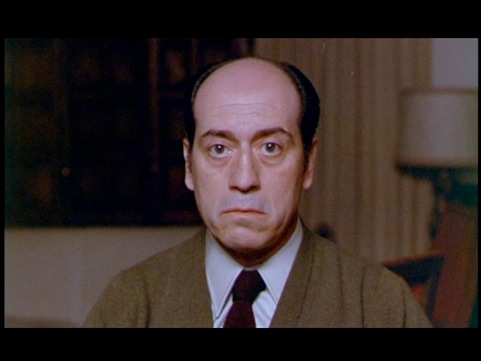
Abdul i Hamza (Marko Grba Singh)_1

My preview of BFMAF 2015 is now up over at Eye for Filmhere.

A new strand – New Berwick Cinema – has some interesting sounding films, most of which I haven’t seen or read much about (the obvious exception being Sueñan los androides / Androids Dream (Ion de Sosa, 2014), which I saw in Barcelona earlier this year – my review and my interview with two of its makers). This year they have also taken ‘Fact or Fiction’ as their main theme, representing the blurred lines between documentary and narrative fiction, and reality and fantasy – as I’ve been exploring documentaries in my ongoing research, I’m intrigued by what I might discover in that strand as well.
Last year was my first time at BFMAF and one of the things I liked most (apart from a three hour early morning ramble around the town and out to the lighthouse) was exploring the unusual spaces where they show the film installations. The emphasis that the festival places on artist / filmmaker installations is one of BFMAF’s most distinctive features and they give careful consideration to the location allocated to each piece – I like how the space in which you see a given film unavoidably shapes your experience of it, for better or worse (most of the spaces last year ‘worked’ but a couple didn’t (for me, at least), and I know to take a jumper with me this year for any viewings in the old ice houses). I’m not going to Berwick for as long this time – I’m doing two day trips rather than staying for a three-day weekend (which unfortunately means that all of the evening events are off the cards because the trains stop running ludicrously early) – but I hope to see most, if not all, of the installations and will also be catching the New Berwick Cinema shorts programme.
I will be reviewing films for Eye for Film – I will update this post with relevant links for the films listed below when the reviews are online.

Abdul & Hamza (Marko Grba Singh, 2015)
Archipels, granites dénudés / Archipelagos, Naked Granites (Daphné Hérétakis, 2014)
La fièvre / A Spell of Fever (Safia Benhaim, 2014)
J’ai oublié! / I Forgot! (Eduardo Williams, 2014) [I forgot it too quickly]
Limbo (Anna Sofie Hartmann, 2014)
Mercuriales (Virgil Vernier, 2014) [not recommended]
No Man’s Land (Salomé Lamas, 2012)
Salam Cinema (Mohsen Makhmalbaf, 1995)
Vampir Cuadecuc (Pere Portabella, 1970)

Full details of the festival can be found on their website.

Closed Curtain (Jafar Panahi, 2013)

Closed Curtain04

My review of Closed Curtain is now online at Eye for Filmhere.

Art, Seascapes, and Life

As I mentioned in a previous post, I’ve been specifically focussed on documentaries for a while in relation to my otro cine español project, but I have also wandered off course to watch a wider range of documentaries and essay films than I might have done in the past. There’s an idea brewing in my mind in relation to the Spanish docs, so I thought that with this post I’d take a brief look at some of the other documentaries that I’ve seen this year.
In addition to writing about Ciutat Morta (Xavier Artigas and Xapo Ortega, 2014) and La danza del hipocampo/ The Dance of the Memory (Gabriela Domínguez Ruvalcaba, 2014) on the old site, I’ve also reviewed a fair few documentaries at Eye for Film so far this year: Arraianos (Eloy Enciso, 2012); Burden of Peace (Joey Boink and Sander Wirken, 2014); Dancing in Jaffa (Hilla Medalia, 2013); The First Film (David Wilkinson, 2015); Humano (Alan Stivelman, 2013); The Iron Ministry (JP Sniadecki, 2014); Life is Sacred (Andreas Dalsgaard, 2014); N-VI Vanishing Roads (Pela del Álamo, 2012); No Land’s Song (Ayat Najafi, 2014); Precinct Seven Five (Tiller Russell, 2014); Prophet’s Prey (Amy Berg, 2014); and Vikingland (Xurxo Chirro, 2011). Most of the reviews that I write for Eye for Film are for films showing at festivals so – because I don’t often review ‘new releases’ and because the focus of the old site was exclusively Spanish – I generally haven’t written about (apart from handwritten notes in a notebook) the ones I watch in other circumstances (y’know, for fun).
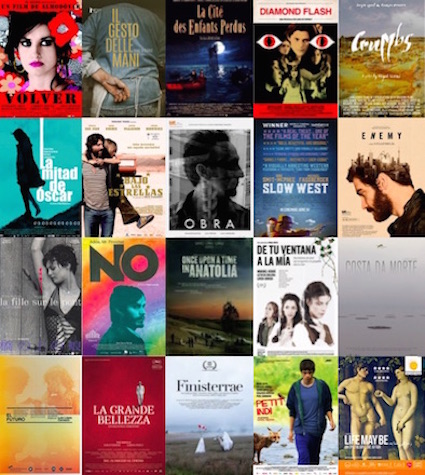
There have been a number of new documentaries released this year that I haven’t managed to see yet. Those that spring immediately to mind are Maidan (Sergei Loznitsa, 2014), Dreamcatcher (Kim Longinotto, 2015), Best of Enemies (Morgan Neville and Robert Gordon, 2015) and Albert Maysles’s final film, In Transit (2015). But of the ones I have seen so far this year (new and newish), here are some of the standouts (listed in alphabetical order):

Zatarain_BrankaBranka (Mikel Zatarain, 2013) – Opening with an epigraph from John Donne’s ‘No Man is an Island’, Branka (the name of a still-publishing magazine founded by exiled Basques in Belgium in the 1960s – a piece of information I gleaned from this in-depth interview with Zatarain over at Desistfilm) consists of 27 minutes of a static camera shot of an island dis/appearing in and out of the mist on a seascape that is for the most part indistinguishable from the sky. The day passes and night falls with the island illuminated by lightning and domestic lights before disappearing back into the mist. Zatarain creates a soundscape that merges domestic and street sounds with a political edge (news reports and chants from a march calling for amnesty for political prisoners) – the audio is less tranquil than the visuals – alongside the sound of the sea. Part of a triptych about Basque society and the ethics / poetry of the image (poética = poetic, ética = ethics), the film is viewable for free online (along with several others of Zatarain’s films) in a collection – La (po)ética de la imagen – at margenes.org.
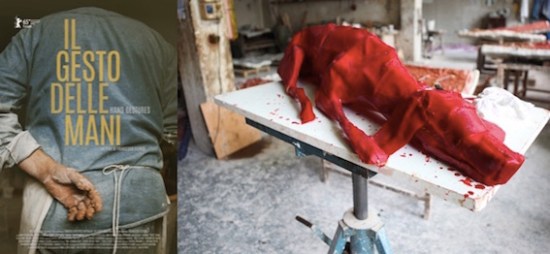
Hand GesturesIl Gesto Delle Mani / Hand Gestures (Francesco Clerici, 2015) – The process from beginning to end – from wax to glazed bronze, and showing the detailed speciality of each artisan involved – of the making of Velasco Vitali’s famous dog sculptures in the Fonderia Artistica Battaglia, a 100-year old foundry in Milan. The title comes from the epigraph with which the film opens – “Sculpture is not a concept. Sculpture is a hand gesture. In the gesture of the body lays the relationship with the world: the way you see it, the way you feel it, the way you own it” (Giacomo Manzù (1908-1991), sculptor). There is no voiceover and only minimal verbal exchanges between the people onscreen – it is all about the craft. It is a genuine privilege to watch such craftsmanship up close and I found this a fascinating and riveting film. Trailer.
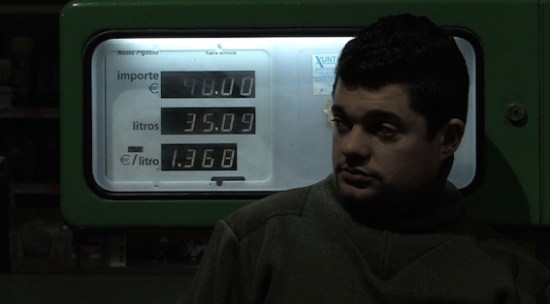
Jetlag01Jet Lag (Eloy Domínguez Serén, 2014) – Described by the director as ‘the chronicle of the film that could never, or never wanted to be’, the film was supposed to be a portrait of people working unsocial hours late at night. But in the process of making the film, the filmmakers found themselves inserted into it as well because over the course of four nights circumstances caused a camaraderie to build between them and their ostensible subject, the manager of an all-night petrol station. The film captures the natural development of this happening, starting off with the sideways glances that implicitly acknowledge the camera’s presence and gradually moving on to more involved conversations between people in front and behind the camera.

Life May BeLife May Be (Mark Cousins and Mania Akbari, 2014) – Some films just set your neurons firing. An exchange of letters in the form of short films sent between Mark Cousins and Mania Akbari as they discuss art, identity, the body, cinema, and exile. I watched this as a rental (it’s available in the UK on GooglePlay and iTunes) and then immediately bought a permanent download. Then I bought the only one of Akbari’s films that’s available here – One. Two. One. (2011) (the release of which by SecondRun DVD was the initial connection between the two filmmakers because Cousins was asked to contribute an essay, which in turn became the starting point for this film) – and Abbas Kiarostami’s Ten (which I’ve never seen, but Akbari is the lead) because I want to know more about her and where she’s coming from. I intend to return to this one because parts of it have burrowed into my head – but I need to watch the other Akbari films first.

National GalleryNational Gallery (Frederick Wiseman, 2014) – With no sign of this appearing in my home city (although it did turn up a few weeks later), I went to Edinburgh in order to see National Gallery in a cinema because I felt sure that the paintings would need to be seen on as large a scale as possible. Wiseman’s film is about the National Gallery as an institution and all of the facets of what that entails – the economics of the place, bureaucracy, the institution as a brand (the struggle between being a national, public space and yet apparently not wanting to appeal to the lowest common denominator), education, conservation, curatorship, craftsmanship, art history, the interpretation of art, and the act of looking. If art can encompass everything, this film attempts to do likewise and to consider the place from every possible angle. My favourite bits were probably the ‘inner workings’-type segments showing restoration, conservation, and craftsmanship (for example, the making of the picture frames would not ordinarily be part of the public discussion / consideration of art, and yet it clearly has an impact on how the art is seen), but it is also a joy to listen to experts enthuse about their respective specialisms.

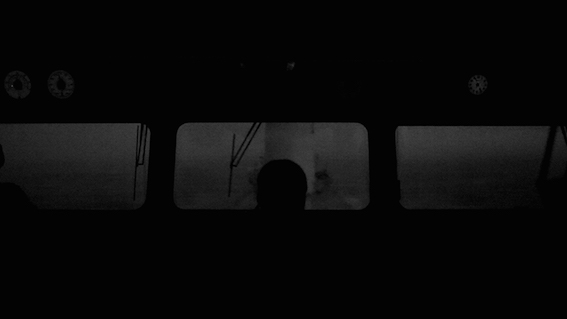
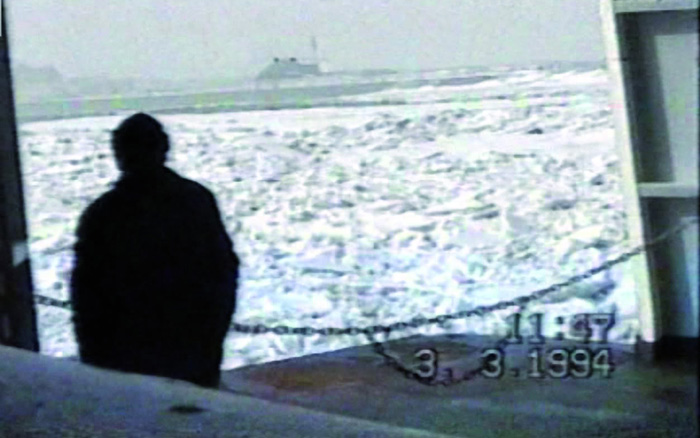
Transatlantique02Transatlantique / Transatlantic (Félix Dufour-Laperrière, 2014) – Black and white. Dialogue free. A dream-like travelogue of a cargo ship’s transatlantic journey between Antwerp and Montreal. I know that I will get another chance to see this later in the year, so I will write about it in more detail then.
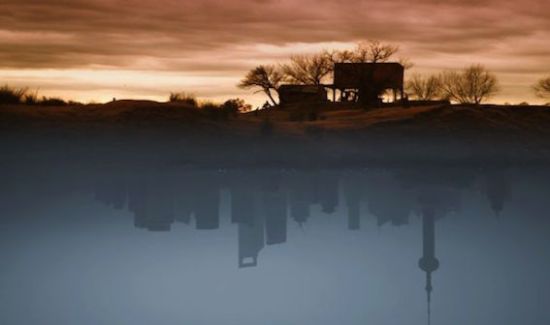
Vivan las AntipodasVivan las Antipodas! (Victor Kossakovsky, 2011) – This was recommended to me by Eye for Film editor Amber Wilkinson a while back but I didn’t get the chance to see it until Doc Alliance had an online season of Kossakovsky’s films (the film is still available as VOD on their site and I also recommend The Belovs (1992)). Setting up a series of contrasts between the landscapes, textures, and ways of life on opposite points on the globe (Argentina / China, Spain / New Zealand, Chile / Russia, Botswana / Hawaii), this visually dynamic film is a feast for the eyes – the juxtaposition of music and movement makes it seem like the camera dances in certain sequences while in others Kossakovsky puts the world on its head.
Further Adventures in the Carlos Saura Challenge

an image of the Carlos Saura Challenge recorded in my notebook

The Carlos Saura Challenge began in February 2013 as a way of addressing a gap in my knowledge of Spanish cinema; I was familiar with Cría cuervos and the dance films, but I hadn’t seen any of the other films from Saura’s substantial career. I have made intermittent progress – my initial aim of watching all 37 of his films in the space of a year proved to be wildly unrealistic, but my viewings ground to a halt for months at a time on several occasions. Attempting to watch them chronologically was possibly a mistake – although you can see themes developing by considering them in that order – and in fact I have ended up looping back a couple of times because earlier films that were unavailable suddenly appeared on VOD or another format (his directorial debut – Los golfos / The Delinquents – was shown on 35mm as part of the Viva! film festival in Manchester in early 2014).
I have been surprised by how much I like his early films. Through necessity (to avoid the censor during the dictatorship) many of the early films are metaphorical – which can be something that I find irritating – but whereas I had been under the impression that Saura made very dry and dour films in that period, I found a mischievous sense of humour and someone who (along with producer Elías Querejeta, with whom he made a run of 13 films starting with La caza / The Hunt in 1966) had clearly done his damnedest to foil those who were restricting what could be put on Spanish screens. Censors often failed to appreciate that suggestion can be more powerful and more resonant than a direct depiction. There are also some great performances from José Luis López Vázquez (who I had previously only seen in comedic roles) and Geraldine Chaplin (a revelation) in those early films, most of them probably little known outside of Spain because they haven’t been commercially available in subtitled form (most of the DVDs that I have tracked down do not have subtitles).
I restarted again in January this year with Cría cuervos (the status of which had been putting me off writing about it) and then went backwards to watch La madriguera / Honeycomb. And then I stopped again. So basically I’ve reached the 1970s, I am 10 films into his career (barely a quarter of the way through his total filmography) and currently in a run of films where Geraldine Chaplin gets put through the mill (I’ve got 3 more films to go before they romantically and professionally parted company from what is an actor-director partnership – they made 8 films together – that merits greater critical attention). Next up will be Elisa, vida mía / Elisa, My Life with Chaplin and Fernando Rey – I’m going to aim to cover that at some point during September.

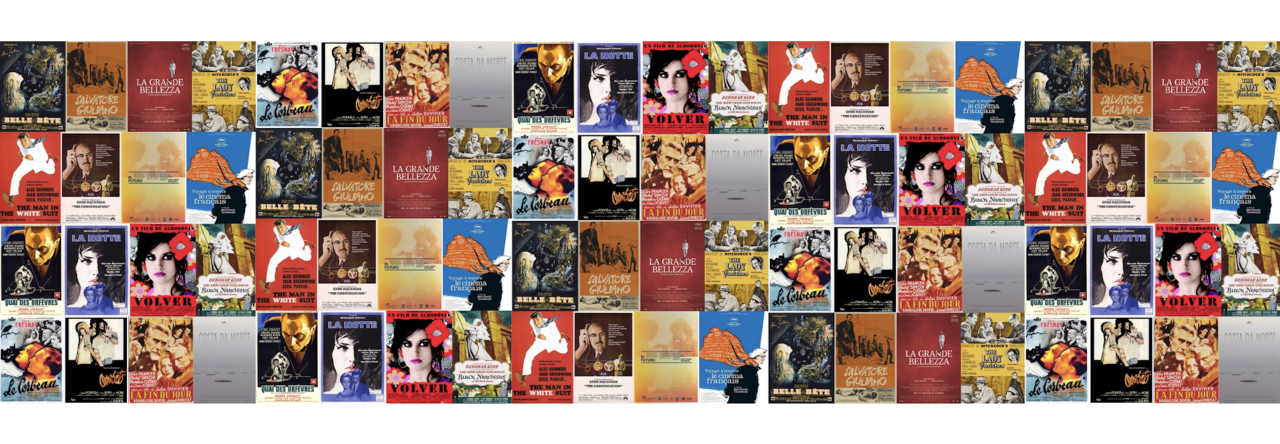
film posters for the Saura films watched to date
I’m going to recap the films I’ve written about so far (and link to where I’ve written about them) and list the ones still to come. I usually list things Spanish title / English title the first time I refer to them – if the English title is in square brackets, it’s a literal translation as there is no official English language title. If a title in the list below has ‘VOD’ next to it that means that VOD is currently the only way to view it (click on ‘VOD’ to be taken to where it’s available – Filmin subscriptions can only be purchased within Spain but Filmotech allows you to pay 7€ for a month and watch almost anything on the site), ‘+VOD’ signifies that means that it is also in circulation on DVD, and nothing next to the title means DVD only (many of them are OOP but I’ve indicated if a film is completely unavailable – i.e. no DVD that I’m aware of). Cría cuervos, Blood Wedding, Carmen, El amor brujo, and Tango all have UK DVDs available. The majority of the other films were OOP but Enrique Cerezo’s current crusade to make Spanish cinema classics more readily available (Spanish DVDs always seem to have very limited runs and some disappear very quickly – I acquired most of my Saura DVDs secondhand) means that a few of the Saura/Querejeta collaborations (and some of the director’s later films including El Dorado and ¡Ay, Carmela!) are now available on DVD and Bluray in restored, no-frills editions (no English subtitles as far as I know) through the Divisa label.
01. Los golfos / The Delinquents (1962) [French DVD only] +VOD. Saura’s directorial debut but one that I saw out of sequence because it had long been unavailable in any format. A French DVD (with French subs only) was released in 2013 but I had the chance to see the film on 35mm at Viva! Spanish and Latin American Film Festival in Manchester in 2014 – to date it is the only one of Saura’s films that I have seen on the big screen.
02. Llanto por un bandido / Lament for a Bandit (1964). Heavily censored at the time of its original release, the version I’ve seen suffers from the censor’s interventions. A lesser film in Saura’s filmography although – as with Los golfos – there are already certain elements that will recur throughout his career. It also contains Francisco (Paco) Rabal on scenery-chewing form, Lino Ventura, and a cameo by Luis Buñuel.
03. La caza / The Hunt (1966) +VOD (VOD includes an English subtitle option). Saura’s first masterpiece.
04. Peppermint frappé (1967) +VOD. The most Almodóvarian of Saura’s films (predating the man from La Mancha by several decades) and the first of his collaborations with Geraldine Chaplin (who here plays three women) and José Luis López Vázquez.
05. Stress-es tres-tres / Stress is Three (1968) [unavailable]
06. La madriguera / Honeycomb (1969) VOD. Chaplin again takes on multiple personalities in this blurring of performance, role play, dreams, and reality.
07. El jardin de las delicias / The Garden of Delights (1970). The blurring of dream and reality seen in La madriguera is kicked up a notch in this darkly funny (with a brilliant performance by López Vázquez) and structurally complicated film – the complex intricacy of the structure acted as a smokescreen to distract the censor from some of the more political elements.
08. Ana y los lobos / Ana and the Wolves (1973) +VOD. Chaplin stars alongside Fernando Fernán Gómez in a film where a sense of uneasy foreboding builds to a dark and horrific payoff.
09. La prima Angélica / Cousin Angelica (1974) +VOD. This is probably López Vázquez’s best performance for Saura (although he is never less than great across all of their collaborations) and it is my favourite of the films I’ve watched so far – it deserves to be better known outside of Spain.
10. Cría cuervos / Raise Ravens (1976) +VOD. Probably the director’s best-known film in the UK. Fiona Noble also wrote a guest post about it for the old site.
Still to come…
11. Elisa, vida mía / Elisa, My Life (1977) +VOD (VOD includes an English subtitle option).
12. Los ojos vendados / Blindfolded Eyes (1978) VOD.
13. Mamá cumple 100 años / [Mama Turns 100] (1979).
14. Deprisa, deprisa / Faster, Faster (1981) +VOD.
15. Bodas de sangre / Blood Wedding (1981).
16. Dulces horas / [Sweet Hours] (1982) [unavailable].
17. Antonieta (1982) [French DVD only].
18. Carmen (1983).
19. Los zancos / [The Stilts] (1984).
20. El amor brujo (1986).
21. El Dorado (1988) +VOD.
22. La noche oscura / [The Dark Night] (1989).
23. ¡Ay, Carmela! (1990) +VOD.
24. Sevillanas (1992).
25. ¡Dispara! / Outrage (1993).
26. Flamenco (1995).
27. Taxi (1996).
28. Pajarico / [Little Bird] (1997).
29. Tango (1998) +VOD.
30. Goya en Burdeos / Goya in Bordeaux (1999) +VOD.
31. Buñuel y la mesa del rey Salomón / Buñuel and King Solomon’s Table (2001).
32. Salomé (2002).
33. El séptimo día / The Seventh Day (2004) +VOD.
34. Iberia (2005) +VOD.
35. Fados (2007).
36. Io, Don Giovanni / I, Don Giovanni (2010).
37. Flamenco, Flamenco (2010) +VOD.
38. Argentina (2015) [due to premiere at the Venice Film Festival].

El otro cine español

Tall trees wreathed in fog in the film Costa da Morte

Back in early 2014 I started what could loosely be termed a ‘project’ to explore the phenomenon that was being labelled el otro cine español [the other Spanish cinema] by certain quarters of the specialist Spanish press. My starting point was this list of 52 filmmakers published by Caimán Cuadernos de Cine in August 2013. From the outset I said that I had some issues with how the list had been compiled, and as I started watching the films I found it to be an increasingly nebulous term that was attempting to corral an unwieldy and disparate group of people. By July 2014 I had decided that the documentaries would be the best place to start – and so I set off, in quite a haphazard way, mainly watching (rather than writing about) those recent(ish) Spanish documentaries that could be said to fall into this otro cine español category (everything I’ve written so far on the topic can be found here).
To be honest, in the second half of 2014 / start of 2015 I got distracted by documentaries and essay films more generally (irrespective of nationality) – this coincided with increased attention being paid to documentaries in the film press (or was it just that my attention had increased and therefore I noticed more writing on the subject?) including Sight & Sound‘s documentary poll, so there was a lot to be distracted by – which is why there is a ‘documentary’ category in the menu of this new site. I wandered off track and lost focus (or redirected my focus because I knew I was going to the D’A Festival in April and therefore I wanted to look at how they had ‘promoted’ the idea of el otro cine español as a kind of movement through a strand of the 2014 festival programme called ‘Un impulso colectivo‘).
The poster for the documentary Edificio EspañaIn relation to the Spanish documentaries, so far the only substantial piece I’ve written was the standalone post on Edificio España (Víctor Moreno, 2013). I have an idea for something I want to write about a particular group of Spanish documentaries (specifically those that have sought to address the financial crisis and its social impact in Spain), but there are a couple more films that I want to watch first – Pablo Llorca’s recent diptych El gran salto adelante / The Great Leap Forward (2014) and País de todo a 100 / The Palace Without Stairs (2014) (the first is fiction, the latter a documentary) and ReMine: El último movimiento obrero / ReMine: The Last Working Class Movement (Marcos M. Merino, 2014). I have all three films – I just need to actually watch them and then work out how / if they fit with ones I’ve already seen. I had planned to write this in August but the combination of things going on at work and moving online sites has scuppered that, so it will have to continue fluttering around my mind for the time being.

So, anyway, I had lost my focus. But in addition to that, what I observed in Barcelona also made me question whether this otro cine español was a real movement or simply a convenient tag to apply to filmmakers who are working outside of the industrial norm in Spain. Branding of a sort – which has its own uses for the filmmakers in question if they can travel as a group – but a very loose wrapper to bind together some filmmakers who are actually quite distinct from each other in terms of the films they are making. Interestingly, the people I interviewed in Barcelona seemed just as uncertain as to whether they were part of an actual phenomenon or if it is only the latest incarnation of an ongoing occurrence that had (for a range of reasons) gained more press attention in the past couple of years. While I was pondering that, I also interviewed Xurxo Chirro in relation to Iberodocs’s ‘Focus on Galicia’ and his description of el otro cine español as being like an archipelago where filmmakers either work alone or in small clusters (rather than a larger, coherent movement) made a lot of sense to me – because some of those clusters (the filmmakers included in (Im)Possible Futures at the D’A Festival, those who form the Novo Cinema Galego [New Galician Cinema], and arguably some groups associated with certain film schools) are clearly apparent within the more unwieldy mass.
That’s where I’d got up to in May – then I went to EIFF, the annual upheaval kicked off at work (note to self: your name is on here now), and so on. I’ve not got much further than considering the concept from that angle. I said in May that I wanted to write the documentary piece first before changing my approach to el otro cine español (documentaries will still be part of that mix, but I think that approaching individual clusters of filmmakers will be a more fruitful way of tackling the topic). I’m now intending to watch the three remaining films mentioned above (and give more thought to drawing those documentaries together for something) but I’m also just going to get started on looking at the archipelago. I will start with the Novo Cinema Galego because I have already seen almost all of the key films by that group of filmmakers. I’ll give my usual caveat – it won’t appear instantaneously because I tend to mull things over until I reach some undefined magical point of enlightenment, but also because there are potentially 2-3 film festivals in September and October that I’m interested in (depending on their programmes) so they will have to be factored in to my schedule. But I’m happy to have a new trail to start down.

Metamorphosis (everything old is new again)

Header_tile1

Well, here we are again.
This is the new Nobody Knows Anybody – still a work-in-progress in terms of appearance at the moment while I familiarise myself with the ways of WordPress (I’ve not got the hang of image functionality on here yet – which is why the header banner is currently out of focus). I’ve started with a fairly basic ‘theme’ (layout) because that seemed a sensible thing to do, not least because some of the bells and whistles on the fancier set-ups are currently beyond my comprehension.
For an explanation as to why I have restarted on a different platform, please read these two posts on the old site: Echoes and Copyright. I am no more protected on this platform (if anything – according to what I’ve read in the past couple of weeks – WordPress actually seems to be even more susceptible to the practice) but…well, I didn’t really know what else to do. I wasn’t prepared to continue writing original material on that site knowing that it was instantly replicated elsewhere unattributed (for whatever purpose). The old site will be staying where it is – expect me to link to it a fair amount, especially in relation to ongoing projects – and I’ve decided that I will continue to put up the kind of links posts that I habitually post when I’ve written about Spanish cinema somewhere else (i.e. if I review a Spanish film over at Eye for Film). But there will be no more longform writing over there.
I chose to hang on to the name. First of all because I’ve spent 4.5 years blogging under that title and I like it. But also because I want some continuity and for there to be a logical connection to the original site, I want people to be able to find me, and I guess I would like (“‘I want’ doesn’t get”, as my Mum says) to assert a sense of ownership. So I’ve brought that name with me…and I’ve brought my own name with me too.
The thing that has most irked me about what happened with the blog is my name being removed from my writing…and yet I did not have my full name on the site. I explained in Copyright why I originally decided to put my identity at one remove from the blog, but those reasons are no longer valid. While I still have to stretch for the word or phrase that I’m grasping for, that is (for me) part of the process of writing, and I no longer feel embarrassed by my writing (clunky though it still sometimes is). Plus, as I’ve been writing for other sites under my own name for more than a year – and then linking to those pieces from the blog and twitter – regular readers (hey, I know you exist!) already know my name. So, I’ve decided to ‘own’ my writing and put my name on it.
I haven’t put the ‘a Spanish cinema blog’ subtitle on here because I saw the opportunity to broaden my scope slightly and to create a space where I could write about any film I wanted. However Spanish cinema remains my main focus and it will most likely be the dominant strand on this new site, but it won’t be the only strand (as indicated by the categories I’ve put in the menu).
My initial plan is to write a post for each of my ongoing projects, summarising where I am with them (as I’ve said, expect me to link back to the old site because I’m not going to repost old writing on here), which will be a useful exercise for me as much as anything else. I’ve got a couple of ideas for new recurring features but I also have (as ever) a backlog of DVDs to watch, so there will be some standalone pieces on unconnected individual films as well. There are also some possible film festival trips coming up, so I’m sure that I’ll have plenty to do. To be continued…