Iberodocs 2016

iberodocs_banner

The 3rd edition of Iberodocs takes place in Edinburgh later this week from Wednesday 4th – Sunday 8th and there is plenty in their programme to recommend. Of the films I’ve seen, I’d recommend Llévate mis amores (which was my favourite documentary at last year’s EIFF), O Futebol and No Cow on the Ice – and also the shorts Ser e voltar (which is paired with the latter feature – both are by Galician filmmakers) and Sin Dios ni Santa María (which appears in the main shorts programme) – but I’ve also heard good things about Rio Corgo and Volta à terra, so I think that the festival is pretty jam-packed with things worth seeing. I have previously reviewed (in relation to different festivals) three of the films that are being shown and I have written another three this past weekend. I will add the links below as they are published over at Eye for Film.

These are likely to be my last reviews for a while, but I hope to get back to writing on here regularly.

Update: Carlos Saura Challenge

Carlos Saura Challenge

I am changing my tactics in relation to working my way through Carlos Saura’s filmography. I ground to a halt more than a year ago having originally started in 2013 but only having watched 10 of his films (around 25% of his entire career). I have since watched a couple more but haven’t written about them – I think I need to have a time constraint involved in order to keep going but not one so rigid that it becomes a routine chore. I also think that what I’ve done to date has been written over such an elongated period of time that I would be better to start again from the beginning with a different format. What I have in mind is similar to the Almodóvarthon I had on the old blog in August 2011 with something published on each of the films in a concentrated time frame – but, given that Saura has made almost twice as many films as Almodóvar, realistically it will need to be spread over longer than one month (maybe 5 – 6 weeks). It will take me several months to watch all of the films and write something about each of them so that they can be posted sequentially within the designated weeks. Longtime readers will know that my place of employment goes through some sort of managerial disruption virtually every summer, so – taking that into consideration – November seems like a reasonable month to aim for (all other non-blog circumstances permitting). [UPDATE: events referred to in this post mean that November will not be possible – so it will likely be in early 2017 instead]

UPDATE (June 2017): I have reconsidered how I’m going to approach the challenge – outlined in the second half of this post.

Review: Beautiful Youth (Jaime Rosales, 2014)

Hermosa juventud

Desistfilm‘s 10th issue – titled ‘From the Pixel to the Glitch: Foundation, materiality and fictions’ – has arrived online today. It’s an exploration of the use of digital media in experimental film or how digital media is used by filmmakers to experiment with different textures and formats. Mónica Delgado (editor of desistfilm) writes that:

In this issue we want to explore about digital media and its variations in experimental cinema as variations of this media. How can digital texture open new paths in cinema opposed to analog cinema? How are the so called internet artists working the digital media? How about the glitch art or impressionist digital art? But we’re also interested to explore films about certain technologies and their expressions: glitch, memes, gifs, which circulate in Twitter or Facebook… how are they material to talk about youth sensibility in the new century? From intimate drama to wacky horror cinema, digital media from its materiality and virtuality in fiction.

I haven’t had the chance to take a proper look yet but there are four central articles in the dossier and an assortment of other related articles, profiles and interviews throughout the site. There is also a reviews section, which is where my own small contribution can be found. I have reviewed Hermosa juventud / Beautiful Youth (Jaime Rosales, 2014), which doesn’t initially have much to overtly connect it with desistfilm‘s thematic focus but the film undergoes a dramatic stylistic shift about halfway through wherein Rosales adopts an innovative approach to depicting the ‘digital generation’. My review is here.


Review: Ixcanul (Jayro Bustamante, 2015)

Ixcanul_combo

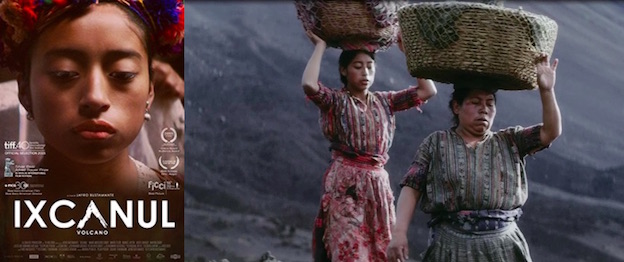
My other ¡Viva!-related review is of Ixcanul / Volcano (Jayro Bustamante, 2015), a female coming-of-age drama set in the Guatemalan highlands. The film had rave reviews on the festival circuit last year (it won a Silver Bear at the Berlinale) but – although it is a well-made film – I wasn’t as taken with it (and if I never have to watch an animal be slaughtered on film again, it will be too soon). My Eye for Film review is here.

Review: Embrace of the Serpent (Ciro Guerra, 2015)

El abrazo de la serpiente

The 2016 edition of the ¡Viva! Spanish and Latin American Festival (I’ve only just noticed as I typed that that they’ve removed ‘film’ from the festival’s title) in Manchester started this weekend – you can see their full line up here.

There is nothing in the Spanish side of the programme that interests me, so I’ve reviewed two of the Latin American titles for Eye for Film. First of all, El abrazo de la serpiente / Embrace of the Serpent (Ciro Guerra, 2015), which has certain commonalities with Miguel Gomes’s Tabu (2012) and is an original take on the ‘journey up river / through the jungle’ film. It will actually be released in the UK in the summer and it’s worth catching if it plays near you. My review is here.

Festival Report: AV Festival 2016

Spare Time01

I’ve written a festival report for desistfilm focussing on the AV Festival’s ‘Resistance’ strand, which spanned 80 years of British documentary filmmaking. The report is here.


Reprint: Pablo Larraín’s ‘Chile under Pinochet’ trilogy

This post was originally published on the old blog in November 2013 (Update, August 2017: where I have reprinted something here, I have decided to remove the contents of the original on the old blog and instead leave a link there to the new site (it doesn’t make much sense to have the pieces appear in two places)). Pablo Larraín’s new film, The Club, is released in the UK today (although apparently it’s not reaching my part of the country until the middle of April) – so I thought it was worth revisiting his previous films. The post has mainly been edited so that references to dates make sense but I’ve also simplified a couple of sentences.

I saw No (2012) in the cinema in early 2013. Although I hadn’t yet seen the two earlier films, I realised that No‘s undercurrent of alegría marked it as distinct within Larraín’s trilogy given that all three relate to Chile under Pinochet; No is like the gulp of air taken after you’ve been held under water for too long.
And life under water is shown to have been a grim and dark place. The first film – Tony Manero (2008) – is set in the darkest period of the dictatorship, in around 1977-78. The choice of year seems to have been partly shaped by the fact that Saturday Night Fever was in cinemas at that point – both the extras on the DVD and interviews contemporaneous to the film’s release reveal that the starting point was a photo of a man, which inspired in Larraín the idea of a killer who just wants to dance. In the Q&A on the DVD, Alfredo Castro (who plays Raúl, the man who wants to be ‘the Chilean Tony Manero’ in a TV dance contest) says that when they realised that the Travolta film was released in Chile in that period, they saw that they could draw some interesting parallels between the character’s behaviour and that of the State. Operating in a general atmosphere of fear and the absence of morality, Raúl doesn’t see why he shouldn’t always get his own way – so he kills in order to fulfil his dancing dream. Abhorrent as Raúl is, and despite the absurdity of his behaviour being in pursuit of the chance to win a TV lookalike / dance contest (Jonathan Romney talks of the first two films’ ‘grotesque absurdism’ (2013: 28)), the film’s occasional jet-black humour (not so much the banality of evil as the mundanity that underpins Raúl’s singleminded attention to detail in his quest to ‘be’ Tony Manero – “Two buttons?”) is undercut by the intrusion of the dangerous reality (police raids and a background undercurrent of the simmering threat of violence).

Tony Manero

Alfredo Castro is the reason I wanted to write about the films because he turns in extraordinary and completely transformative performances both in Tony Manero and Post Mortem (he takes a supporting role in No). I don’t know why – having focussed on actors for a long time in my research – but I am still surprised when an actor turns out to be completely unlike how he appears onscreen in a given film. Castro appears in the DVD Q&A, looking not just younger and more animated, but positively rejuvenated in comparison to his appearance as the pasty and almost-jaundiced Raúl. I’ve been trying to decide whether he should be described as vulpine or vulture-like (he is frequently shown in profile, drawing attention to a prominent nose) – Raúl both scents danger (he often surreptitiously observes acts of violence being carried out by others) and also circles around in the aftermath (whether relieving an unconscious man of his watch and jewellery or faking a good samaritan act with an old lady). Castro’s performance is a composition of costume (the suit) and body language, alternating between the peacock-like strut on the dancefloor and scurrying rat-like run with which Raúl makes his way around the city (he has an in-built sensor for the approach of bigger animals – he’s frequently seen hiding in doorways or behind mounds of rubble as either the military or the police patrol the area). I found it interesting that his focus is on Tony Manero, the character, rather than John Travolta, the actor (Raúl walks out of a screening of Grease with a look of incomprehension). Castro says in the Q&A that although they knew the character would be a dancer, they wanted to avoid the ‘perfect’ style of American musicals. The dancing in Saturday Night Fever is athletic rather than elegant, and perhaps more importantly is also relatable to Raúl’s social class and to the street. The restraint of Castro’s performance is made clear in the two instances when emotion floods Raúl’s face: being moved to tears in the cinema, watching Saturday Night Fever; and when he is applauded after his TV performance (his reaction here doesn’t happen after the applause at the earlier lodging-house show). On both occasions he is transformed before our eyes.

Post Mortem

The second film, Post Mortem (2010), moves further back in time to September 1973 and the military coup. It is a quietly unsettling film, and very different stylistically to the other two films. The theme (or sense) of surveillance runs through all three films – the handheld camera work in Tony Manero suggests a city under constant watch, while in No it evokes the intimidation of the security forces. Post Mortem‘s very elegant and formal framing is closer to voyeurism, indicated in our introduction to Mario (Castro) where he is standing in front of his main window, waiting for his showgirl neighbour Nancy (Antonia Zegers – luminously fragile but also playing Nancy as narcissistic and flaky enough to truly be a danger to others) to arrive home. The idea of a window is maintained by the letterbox framing throughout the film, which also suggests a restricted view: things frequently happen just out of shot (I had headphones on when I was watching it and the sound is also frequently positioned to the side or somewhere behind you), below the frame. One example is the way that Mario (and the viewer) misses the raid on Nancy’s house (we hear explosions and shouting) because Mario is looking away from the window while he is in the shower and the camera stays on him (observing him through the window). But this is also possibly a comment on people deliberately not looking – averting their eyes to an unpalatable reality (and trying to avoid being seen themselves).
Mario is a grey creature, Castro’s wolfishness from Tony Manero completely gone, his face hidden behind a curtain of light grey hair, and much like one of the cadavers whose post-mortems he records for the pathologist; he is one of the walking dead. But he is also attempting to be invisible, to get along, and not draw attention to himself – something that his apparently already deadened nature helps him with. In contrast, his female colleague (Sandra – Amparo Noguera, who played Raúl’s girlfriend in Tony Manero), although presented in an equally pallid palette of colours (costume, but also her complexion) cannot inure herself to the piles of corpses that start to stack up as the military coup unfolds; I didn’t take this to be a representation of the ‘hysterical female’, but rather someone who is fervently trying to cling to what she believes in and what she ‘knows’ in the face of obstruction, obfuscation, and denial. One gets the sense early on that this story is not going to end well, and the final wordless sequence silently foretells the horrors that were still to come for Chile in the aftermath of the coup.
Many of the same actors (Castro, Zegers, Noguera, and others) appear in all three films, but in No Gael García Bernal comes centre stage as advertising whizz-kid René Saavedra, the strategist behind the ‘No’ campaign in the referendum that would finally oust Pinochet. The choice of lead perhaps speaks to the representation of a younger generation, hope and alegría on the way, but the Mexican actor also brings with him a measure of ambiguity that suits the character; we are never really sure whether René believes in the ‘No’ cause or simply likes a challenge and views democracy as another product to sell (something suggested by his using the same lines when he introduces the first referendum piece as when he introduces the advertising promos for a soft drink (at the start of the film) or a new telenovela (at the end of the film)). Either way, his youthfulness fits with the aesthetic of the film – utilising U-matic film so as to be able to seamlessly blend archival footage into the film (about 30% of the film is archival footage according to a Larraín interview on the DVD – they called up the people who appeared in the original ‘No’ campaign and use them to play themselves, so that on the monitors the original footage shows their younger selves while they appear within the film itself as they are now, 24 years on, ‘history […] written on their bodies’ in Larraín’s words) – the video ‘feel’ of the footage and naturalistic lighting (lens flares and all) suggesting youthful adventure and moments caught on the hoof (not unlike the way the ‘No’ campaign itself was shot).

No

Alfredo Castro again transforms himself, here playing René’s lizard-like employer, an advertising executive who sides with the ‘Yes’ campaign (eventually taking it over in response to what the ‘No’ team manage to pull together) but who nonetheless recognises talent and engages in a cat-and-mouse provocation with the younger man. The back-and-forth between Lucho (Castro) and René, an almost affectionate bickering that has an undercurrent of real threat to it, and Lucho’s private talks with the Prime Minister (Jaime Vadell, who played the main pathologist in Post Mortem), provide much of the film’s humour (in addition to some of the absurdities of the world of advertising, and small touches such as the cleaner at the ‘Yes’ headquarters frequently whistling the ‘No’ campaign’s jingle); the lighthearted tone of the film mirrors the ‘No’ campaign’s ‘Happiness is coming’ sunny representations, in sharp contrast to the earlier two films. However the film still points to the darkness beyond that sunniness, whether in witness testimony about the disappeared, the State’s surveillance and attempted intimidation of the ‘No’ participants, or the cacophonous range of political opinions among the opposition. The latter includes René’s radical estranged wife (Zegers) who tells him that in taking up the challenge, he is playing by Pinochet’s rules and by extension validating what many on the Left thought would be a rigged outcome. Although the end of No is ambiguous (Larraín is quite pragmatic about the limitations of what was achieved and what Pinochet’s lasting legacy for his country was – see the interviews on the DVD), my lasting memory of the film from my first viewing was of sunshine. The trilogy goes out on a euphoric high.


Reprint: La madre muerta / The Dead Mother (Juanma Bajo Ulloa, 1993)

La madre muerta01

This is another in what will be a series of ‘reprints’ of posts that were on the old blog. I have edited / partially rewritten this one (and played around with the images) but the original from March 2011 can be found here (Update, August 2017: where I have reprinted something here, I have decided to remove the contents of the original on the old blog and instead leave a link there to the new site (it doesn’t make much sense to have the pieces appear in two places)). I wrote two posts about La madre muerta on the old blog, and the other one – an ‘anatomy of a scene’ post that looks very closely at a specific set piece from early in the film – is also likely to be revisited on here at some point.

Director: Juanma Bajo Ulloa
Screenplay: Juanma and Eduardo Bajo Ulloa
Cast: Karra Elejalde, Ana Álvarez, Lio, Silvia Marsó
Synopsis: During a burglary, Ismael (Elejalde) casually murders a woman and shoots her young daughter, Leire. Fifteen years later, Leire (Álvarez) is mute and has the mental age of a three-year-old. By chance Ismael sees Leire in the street and becomes convinced that she can recognise him. He decides to kidnap her…

‘La madre muerta is the story of a killer without scruples who steals chocolate from a little girl, and of how the little girl takes back the chocolate from her (now) victim years later’ –Juanma Bajo Ulloa (DVD booklet [my translation])

I first watched La madre muerta more than fifteen years ago on a Tartan Video VHS*. The scenes / aspects that I remembered most strongly before I revisited the film were: the prologue (the burglary); the scene in which Ismael tries to kidnap Leire and knocks himself out with the chloroform he has prepared for her grandmother (this is the set piece that forms the basis of the other post mentioned above); the ‘Aguadilu’ scene where Ismael pretends to be a clown to try to make Leire laugh; the intrepid investigating nurse hiding down the side of the wardrobe; and the image of Leire chained to the bed with a dog collar. Watching the DVD, I was surprised that I had no memory whatsoever of the early scene in the bar, which is incredibly violent and nasty (leaving us in no doubt, if we had any after the prologue, that Ismael is capable of anything). But perhaps the other scenes stuck in my mind because they are unsettling in a subtler fashion.

From the beginning of the film director Juanma Bajo Ulloa plays with both genre conventions and perspectives – i.e. the (physical) angle from which we view events is used to radically alter our perception of what we have seen – to continually wrongfoot the viewer. As Mark Allinson observes, the prologue has all the hallmarks of a thriller and the viewer’s ‘generic expectations’ (2003: 147) initially cause us to think that the woman we see being woken up by the intruder’s noise will be the protagonist of the film. But we barely have time to register the woman’s presence in the same room as the intruder – we hear her, rather than see her (she says “No hay dinero” [“There is no money”]) – before the intruder raises and fires the shotgun, and the woman (and mother of the title) drops to the floor (Ismael steps over her with barely a glance). Allinson suggests that our assumptions then turn to the possibilities of the investigative crime thriller, but that is also not to be – and the character who later thinks that she is in a detective film (Blanca – played by Silvia Marsó) does not triumph in her endeavours (Bajo Ulloa chirpily comments on the audio-commentary at the ‘end’ of that narrative strand that “in real life, the good don’t win” [my translation]).

La madre muerta_perspectives

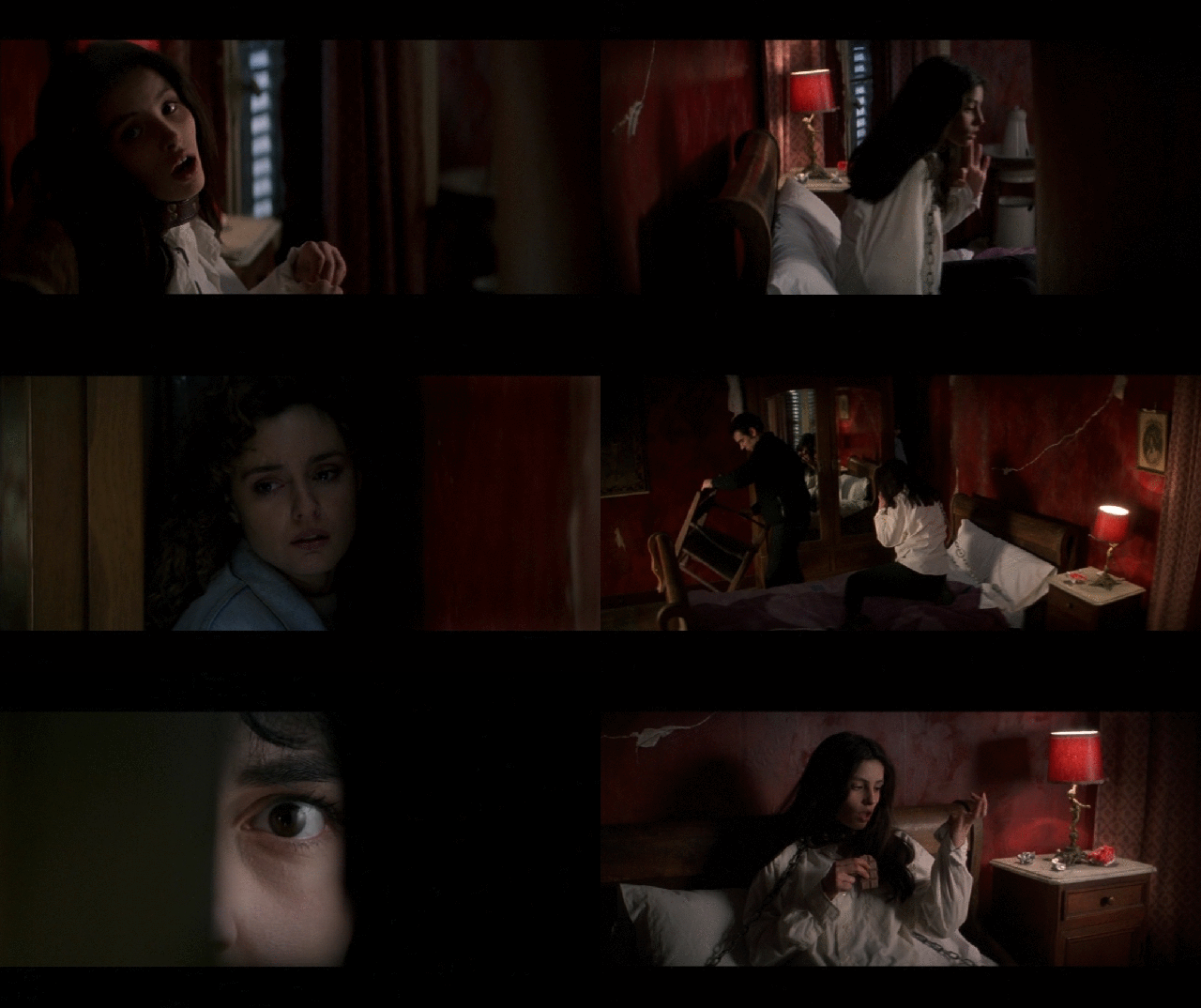
In Sight & Sound, Leslie Felperin pointed out that ‘throughout the film, an edit or a camera angle obscures a view’ (1996: 46) with the intention of making events and motivations ambiguous; there are several sequences in the film where the camera takes on a character’s POV in such a way that the viewer is misled. The most infamous of these is the sequence where Blanca – the nurse who cares for Leire at the medical daycare clinic – breaks into the house to rescue Leire but then finds herself trapped. She hides down the side of the wardrobe in the room where Leire is chained to the bed. When Ismael enters the room, the camera continually returns to Blanca’s POV. Initially she cannot see him but leans forward when she hears a zip being undone and sees Ismael’s back as he stands alongside the bed, with Leire kneeling on the bed in front of him: from Blanca’s POV it looks as if Ismael is forcing Leire to perform oral sex on him. The camera then cuts to what is effectively Leire’s POV (in front of Ismael) and – in a darkly comic ‘reveal’ – the audience sees that he has been surreptitiously feeding her a bar of chocolate (both of them have a sweet tooth) that is hidden in the front of his jacket (the source of the zip noise). As Leire sits back on the bed and Ismael takes a seat, we then see a shot of Maite’s (Ismael’s girlfriend, played by Lio) eye at the doorframe – she is seeing the same scene in a mirror angle to Blanca (she is also behind Ismael but on his other side). Both women then clearly see Leire eating chocolate and come to the same conclusion as to what has transpired out of their line of sight (they take the chocolate to be a ‘reward’ – both mutter “hijo de puta”, although for slightly different reasons).

La madre muerta02

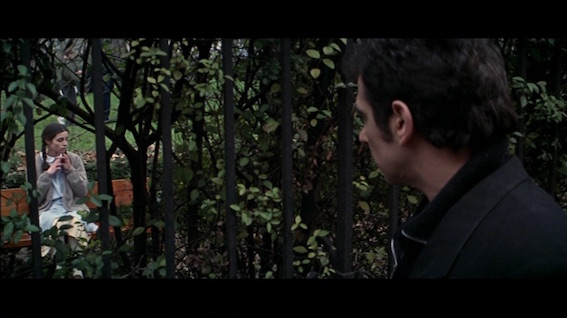
That sequence not only misleads the viewer for a comic payoff but also plays on the deep unease felt by the audience on account of the ambiguous ‘attraction’ that Leire holds for Ismael. When he goes in search of her (after his accidental sighting), his initial perspective is through a hedge and the above shot encapsulates how Ismael treats Leire as something to be looked at and watched – the framing through the gap in the hedge gives the image a peep show quality. Likewise, Maite also finds the manner in which Ismael watches Leire to be disquieting – she becomes increasingly jealous and questions Ismael’s feelings for the girl when she discovers him asleep in a chair opposite Leire’s bed. His excuse (he was worried Leire might escape) leads Maite to suggest chaining her up, which only increases the tension: as Nigel Floyd said in his review, ‘the fact that Leire, a helpless child trapped in a woman’s body, is fetishistically manacled to a bed lends a dangerous, almost perverse erotic edge to some scenes’. This comes to a head in the ‘Aguadilu’ scene where Ismael tries to make Leire laugh – he is preoccupied throughout the film by the fact that she does not smile or laugh – by putting on silly voices, making noises and painting his face like a clown. In a somewhat desperate final attempt, he decides to tickle her during which he grabs her breast, an action that was innocently intended (consciously, at least) but which visibly shocks him because he is confronted by the fact that Leire may have the mind of a child – and Álvarez’s performance of wide-eyed wonderment during the sequence is brilliantly observed – but she has the body of a woman. Although she has previously shocked him by returning his gaze – in a second sequence where he looks at her through the hedge at the clinic, a noise attracts her attention and she looks straight at him (in response, he runs off) – this scene is the first time that he acknowledges to himself that he views her as something more than a child (he furtively looks over his shoulder after he touches her breast, as if someone might catch him in the act – also an acknowledgement that what he’s doing is wrong) and also as something more than a hostage. He looks at her sadly, and then moves away from her: he is unable to look at his own reflection when he sits back down in his normal chair / observation post, and he slams the mirrored wardrobe door shut.

La madre muerta04

That he is given a moment of self-awareness is an illustration of the film’s humane treatment of its characters; although Ismael is not allowed off the hook, he is offered the chance of redemption. The film has a fairytale quality – something that it shares with two of Bajo Ulloa’s other films (Alas de mariposa / Butterfly Wings (1991) and Frágil / Fragile (2004)) – but Ismael is allowed to be something other than just a monster. Karra Elejalde’s performance is central to this. In an introductory piece in the DVD booklet, director Nacho Vigalondo – who cast Elejalde in his directorial debut, Los cronocrímenes / Timecrimes (2007) – describes the actor and his performance as “creating a character that, like the rest of the film, is a balancing act between ‘costumbrismo’ [something very specifically local] and impossible cliché, summed up in the red painted face that is as much circus-like as it is demonic. Your father’s friend, and an extraterrestrial. At the same time” (my translation). Bajo Ulloa says on the audio-commentary that his main problem after writing the script was finding the right actors to play the two central roles. Álvarez is outstanding as Leire, and utterly believable as the child trapped in a woman’s body (you do not see her ‘acting’ at any point), but Elejalde has to walk a tightrope of charm and menace while also carrying off some darkly comic sequences. The film was not warmly received by Spanish critics (the El País review – here – is so scathing that it will make you wince), but the English reviews that I have found (in Sight & Sound [not available online – but in the March 1996 issue], Time Out and Empire) took a more positive view of the unsettling combination of the tender and the twisted that the film manages to pull together through plot, character, and performance.

*There is no UK DVD but the re-mastered 3-disc ‘edición coleccionista’ – released in Spain in 2008 – has optional English subtitles for the film.

Reviews: AV Festival 2016

The AV Festival runs from 27th February – 27th March. That’s an unusually long runtime for a festival but there are events and screenings spread throughout that whole month, so my reviews will be appearing over the same time period. That said, quite a lot of the films being shown are ones that I either own on DVD or can access via VOD (for a lower price than a cinema ticket), so I’m currently attempting to get a head start on my reviews by watching those films at home. I’m aiming to review 20 films overall, some of which are screening during the last weekend of the festival so I will add titles and links to this post as and when the reviews go online. The first batches of reviews are for collections of shorts but almost all of the rest will be standalone features.

British Doc shorts

1930s – 40s British Documentary Movement –

Showing as part of the ‘Resistance: British Documentary Film’ strand, this collection of four shorts from the 1930s and 40s picks up on some of the same issues raised by George Orwell in The Road to Wigan Pier – namely poor housing conditions and precarious employment in industrial areas. According to the festival’s website, the screening at the Tyneside Cinema on 1st March will show them on 35mm – I watched them on the BFI’s 4-disc boxset, Land of Promise.


Jennings_Finest Hour

Finest Hour: Films by Humphrey Jennings –

Jennings is perhaps the best-known name among the British documentary makers of the era and is rightly revered for his poetic artistry. What I’ve liked most though is his eye for the small details – often moments of happenstance – that have the spark of real life rather than something stiltedly staged (or self-consciously presented) for the camera. Some of his films are in the Land of Promise boxset – and the BFI also has three volumes of DVDs dedicated to the director – but several of them (indicated below) are also available to watch for free on the BFI Player.


A Dream from the Bath01

Between Times: Marc Karlin –

On the weekend of Friday 4th – Sunday 6th March, AV Festival are focussing on director Marc Karlin (details here) who spent several decades as a filmmaker consistently questioning and critiquing the British Left. I will only manage to see a couple of his films during the festival, but almost all of the films that are being screened (including the five on Nicaragua) are also available to rent on Vimeo courtesy of the Marc Karlin Archive (here) – I’m certainly planning to investigate his other works.


Nightcleaners01

Nightcleaners 

This documentary about the 1970-72 campaign to unionise the cleaners who worked overnight in London office blocks was screened on International Women’s Day. I didn’t have time to write about it until two days later, by which time I felt that something of its quicksilver and abstract nature had already slipped beyond my grasp. It is by no means ‘difficult’ viewing (I hadn’t been sure what to expect – it caused a stir in academic circles at the time of its original release and a lot of the contemporaneous writing about it seems to verge on the incomprehensible) but it is a film of many layers. It is also the best film I’ve seen so far this year.


Revue01

Levels of Democracy: Ukrainian Film Weekend

This weekend (18th-20th March) the AV Festival is focussing on radical Ukrainian documentary. Within that context they are creating a profile of Sergei Loznitsa by screening three of his films – his latest, The Event (2015), as well as Maidan (2014) and Revue (2008). I was supposed to be seeing The Event and two classics from the silent era – Earth (Alexander Dovzhenko, 1930) and Enthusiasm (Symphony of the Donbas) (Dziga Vertov, 1930) – but that is not how my weekend has turned out, so there will only be my review of Revue (available on DVD in a set with his films Blockade and Landscape, which is how I saw it) for this section of the festival. If you’re interested in Loznitsa, Maidan is also available on DVD and the majority of his other documentaries are available as VOD on the Doc Alliance site (note: I wasn’t overly fussed by Revue but I like some of his other films considerably more).

  • Revue (Sergei Loznitsa, 2008)


Refuge England01

March to Aldermaston: Free Cinema

As part of the ‘Resistance: British Documentary Film’ strand, the festival is screening a showcase of shorts from the Free Cinema movement – March to Aldermaston (Lindsay Anderson, 1959), Refuge England (Robert Vas, 1959), and We Are the Lambeth Boys (Karel Reisz, 1959). The latter two are available to watch for free on the BFI Player – here and here respectively.

That’s it from me in terms of AV Festival reviews. My report on the British documentary section will appear after Easter.

Preview: AV Festival 2016

AV Festival_theme

“Meanwhile, what about Socialism? It hardly needs pointing out that at this moment we are in a very serious mess, so serious that even the dullest-witted people find it difficult to remain unaware of it. We are living in a world in which nobody is free, in which hardly anybody is secure, in which it is impossible to be honest and remain alive.” – George Orwell, The Road to Wigan Pier (1937)

I’ve written a preview of the forthcoming AV Festival 2016 over at Eye for Film. The festival takes George Orwell’s The Road to Wigan Pier (1937) as its thematic inspiration, asking “Meanwhile, what about Socialism?”. As I explain within the preview, AV Festival 2016 is billed as ‘Part 1’ in relation to Orwell’s book (which is divided into two parts) with ‘Part 2’ intended to arrive in two year’s time in the form of the festival’s 2018 edition (it’s a biennial festival). I read the book last month and was startled by how much of what Orwell observed and criticised in the late-1930s is still with us in 2016 – it is well worth reading. I’m looking forward to discovering how the festival has interpreted it, not least because I’ve hardly seen anything that they’ve programmed.

Eye for Film have also made a page with the full film listings of the festival – you can see that there is a lot of variety arranged around three themed weekends. I’ll be seeing a bit of everything, including several of the films at the last of those weekends – Levels of Democracy: Ukraine Film Weekend – but my main focus will be the British documentary strand, which is woven throughout the programme over the course of the whole month. I’m also hoping to get to some of the exhibitions and installations that will be at various locations around the city. You can find the full details on the festival’s website – here.

Due to the timescale over which the festival is spread, I will manage to review / write about more individual films than I normally get the chance to at a single festival. I’ll be writing reviews for Eye for Film and a report on the British documentaries for desistfilm. My reviews are already starting to appear, so I will make a separate post tomorrow for the various links.


Reprint: Aita (José María de Orbe, 2010)

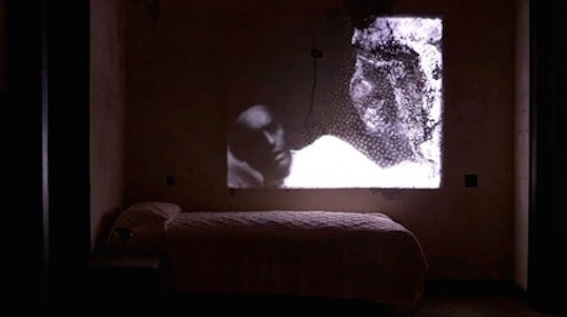
As I mentioned last week, over the course of the next month or so I’m planning to (re)post some pieces that were written for the original Nobody Knows Anybody blog. It was only really in late 2013 that I started to be happier with my writing – almost all of the pieces that I’m planning to reuse were written in 2014 or later. I will be rewriting/editing some of them, but this one is actually untouched (it was originally published in February 2014 – Update, August 2017: where I have reprinted something here, I have decided to remove the contents of the original on the old blog and instead leave a link there to the new site (it doesn’t make much sense to have the pieces appear in two places)) apart from the fact that I’ve taken the opportunity to learn how to make GIFs and have replaced some of the original images accordingly. The only thing that I’ve changed my mind about in relation to Aita is in the penultimate paragraph – I don’t think that the bedroom within the footage is necessarily the room that the image is projected in, but because the way in which one image flickers over the top of the other that was how it seemed to me on first viewing.

The film relates to my recurring fascination with architectural spaces that are presented as repositories for memories, or that otherwise have their history written into the fabric of their construction (a theme that will reappear in a couple of the other posts that I’m planning to revisit), but its play of light and shadow also results in a magical and slightly otherworldly film (and one of my favourites that I’ve seen in the course of writing the blog).


Aita (José María de Orbe, 2010)

Aita_1

This film casts a spell as a once grand, still-impressive house is depicted as a repository of memories that sporadically flicker into life on its faded and peeling walls.
Aside from a group of schoolchildren being shown the house part way through the film, we learn little of its history or the specifics of the people who once lived within it. It is old and has been expanded at various junctures with different historical tastes and styles being integrated into what nonetheless feels like a coherent space. That said, we do not really gain a sense of the geography of the house; rooms are shown in isolation and it is difficult to work out where they are in relation to each other. Likewise, the film is made up of a series of windows, mirrors, and doorways that frame the interiors but reveal little: they frame what we see inside but offer no outer view (we only see the grounds from the outside, although they are sometimes half glimpsed through shutters or net curtains), and the sense grows of the house as an enclosed, hermetically-sealed, entity. The passing of time has marked its surface, as nature has reclaimed every nook and cranny, vines like veins that take life rather than sustain it (and add to the sense of the house being sealed); a scene where the caretaker (Luís Pescador) starts to remove them from the facade seems like it is breathing life into a suffocated surface even while bits of cement audibly crumble and fall away. Renewal and death. Death and renewal.

Aita_2

Little by little we work our way into the inner life of the house. The film starts outside with a discussion between two archaeological workers about the neglected state of the house and garden, which ends with the observation that there are signs of someone trying to take on nature and reclaim the house from its grasp. The rest of the film follows this caretaker as he commences a concerted effort to bring the house back to life (to what end, or why now, is not something we discover). It is a film with many textures as almost every wall we see is peeling or is in some way marked, the remnants of lives and previous incarnations left on the surface: the house is littered with tactile reminders of times past. Director José María de Orbe unfurls the house for the spectator, utilising layered spaces within single shots that are revealed or concealed by light and shadows (the use of light is beautiful) via the very deliberate opening and closing of doors and windows as the caretaker makes his way around the building.

Aita_windows

The film largely unfolds in silence apart from the diegetic sound of the local environment and the physical actions of those onscreen, and a series of short conversations between the caretaker and the local priest (Mikel Goenaga). Those conversations – about bones found in an archaeological dig in the grounds of the house (which is next door to the church), the senses that last longest after death, and a terrible white light (unseen by us) that starts to plague the caretaker – point to what the house will reveal as its layers are peeled back and raise the issue of whether some things are better left undisturbed. To begin with, it seems that ‘breathing life’ in to the house just involves repairs and sprucing it up, but about halfway through the running time something unexpected happens and the house becomes a living entity in and of itself, a repository of memories (of the house, its inhabitants, and the locale). As a storm lashes the house in the dark, and the rain running down the window ripples down a tiled wall in shadow form, making it seem as though the wall is trembling, the house suddenly flickers into life (the sound of the rain still on the soundtrack).
Aita_illusions

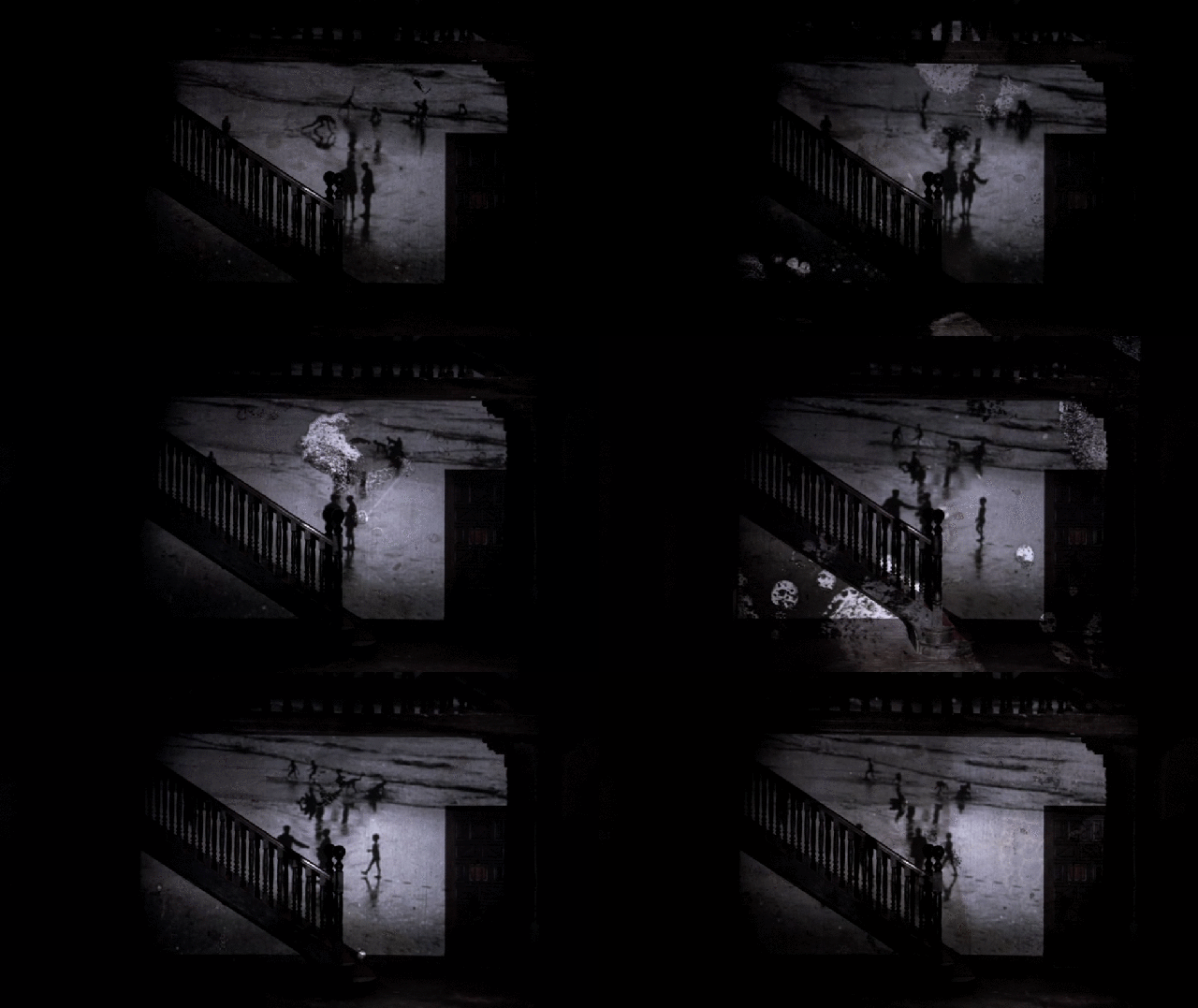
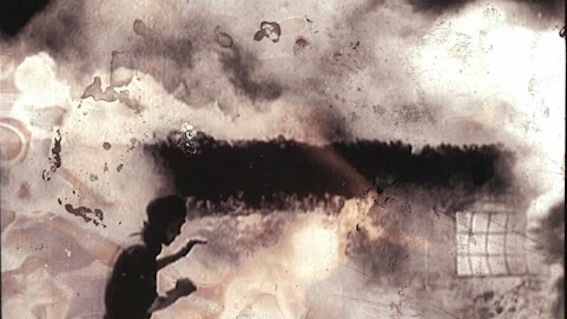
The images projected onto surfaces of the house – mainly the wall of the grand hallway and that of a small bedroom – are history of the house (which can be seen within the footage) and its locale. Blending archival footage of the Basque Country (which is where the house is although only the archaeologists at the start speak in Basque; the caretaker and the priest converse in Castilian Spanish) with film of the house and the eponymous Aita (the Basque word for ‘father’) (Pedro Mayor) shot in the same style, the deliberately degraded and manipulated film stock (Antoni Pinent has the credit ‘manipulación de 35mm’) recounts sadness, suppression and the hidden, and the forgotten ghosts that populate the interstices of history. In the booklet that accompanies the DVD, the director says that they wished to create a new dialogue between the fragments of archival film and the house. Images that you would expect from early cinema (people enjoying themselves – we see a beach and later men dancing) are interspersed with sights that have a sinister undertone (priests and men in white coats seeming to torment children and young people in different contexts) and those of destruction. Looking at the end credits, the sequence showing men consumed by smoke (which finds an echo of the sequence where the caretaker smokes the woodwork of a grand fireplace) as they vainly attempt to tackle an enormous fire, may be footage from the bombing of Guernica (the town is named but there is no date given – if the fragments are listed in the order in which they appear, then ‘Guernica’ matches this section); if it is footage of the aftermath of the bombing, the deliberate degradation of the celluloid (the warping of which ripples, tremulously, across the surface of the image), with the effect of seemingly layering fire over fire, obliterating the past, is an eloquent and elegant indictment of the act.
Aita_8

But the footage that specifically relates to the house is both mysterious (we are given no context) and threatening (the small bedroom, which already generates a sense of foreboding, is seen within the footage); the spectral beings that appear in those ‘memories’ seem to relate to the white light seen by the caretaker (who sleeps in that bedroom when he stays at the house). In one sequence the ‘light’ obscures a girl’s face, rendering her anonymous and denying her an identity (again, a suppression), but in the sequence relating to the bedroom, it passes from the spectre to the man in bed, engulfing his head (an attack). The lack of contextualisation lends the images an almost stream-of-consciousness poetry: vestiges of the past witnessed by the house are replayed on its walls without an obvious narrative structure. The related short film (50 minutes) Aita, carta al hijo (2011) is essentially a reworking of the feature but shorn of all conversation scenes and adding a voiceover (as well as some additional shots such as rooms viewed from a different angle and a few more inserts of archival footage). The voiceover (performed by the director himself) is that of the current owner of the house, who has been sent the papers found by the caretaker in the aftermath of a break-in, and takes the form of a letter written from a father (the father / aita we see in the fragmented archival footage?) to his son asking that he try to break from the cycle of violence and hate propagated in the region as if it is a tradition to be handed down through the generations. The lack of human interaction in the short (although it does include the footage of the atheist caretaker apparently finding some solace in listening to the harmonies of the church choir) adds an additional layer of melancholy.

But the mystery and melancholy are not affectation and neither is the poetry of the film. It is rare that a film feels utterly original, but that was how Aita felt to me. I recommend watching it in darkness because the play of light and shadow is magical.
Aita_9

Aita_10

Five Years

An image from the finale of Nadie conoce a nadie / Nobody Knows Anybody (Mateo Gil, 1999)
Image from the finale of Nadie conoce a nadie / Nobody Knows Anybody (Mateo Gil, 1999)

It is exactly five years since I first started writing on my original Nobody Knows Anybody blog (the picture above was the first header image). I have been unsure of how to mark the occasion given that I stopped writing there (and started this new incarnation) last August when I discovered that the full contents of the site had been ‘scraped’ by a third party. I’ve ended up writing a brief goodbye post there today (it is contained within an image so that it cannot be overwritten). For the past five months I’ve only posted on the original blog when I’ve written about Spanish cinema (the original site focused exclusively on Spanish cinema) for another place – e.g. reviewed a Spanish film or written a festival report that included Spanish works – and in those instances I have simply posted the link with minimal details. I don’t think that there’s much point continuing with that, so now it’s best to just draw a line under it and move on.

That said, while I initially stated that I wouldn’t be reposting old writing on here, I now find myself in two minds on that issue. I had considered choosing a piece of writing from each year and reposting it here (possibly updating certain things) as a way of marking the five years. However, when I went back through the longer pieces, I found that they were a bit like time capsules – you (or I, at least) can see my writing develop from my initial struggles to get away from a more academic mindset (something that I acknowledged or referred to within a lot of the earlier pieces because I was also using the blog to reflect on my writing processes), to becoming more comfortable with expressing my own opinion without recourse to half a dozen other writers to support my argument / point of view. I don’t really want to go backwards. I don’t agree with everything that I’ve written in the past but I also don’t feel the need to rewrite it – it is what it is and reflects where I was at the time. I also think that some of the writing would seem odd in isolation, taken out of its original context (where you can see what else I was writing about in the same period). So that idea bit the dust.

On the other hand, there are certain posts that I would like to ‘take with me’ – either because they’re part of something that I haven’t finished yet, or things that I’d like to revisit (here I’m thinking specifically of the two ‘anatomy of a scene’ posts [on La madre muerta and Los lunes al sol] where I used multiple still images to try and convey either gesture or camera movement – I’m wondering whether I could redo them with gifs?), or a few about films that I really connected with. All of these posts were original pieces written specifically for the blog – i.e. I am not talking about the posts that I adapted from my PhD thesis. I think initially this would not involve more than half a dozen posts, plus the Carlos Saura ones (although that challenge has dragged on for so long that those posts are a sequence where you can see a definite change in my writing over time – I may rewrite some of the earlier ones). If I actually find the time to get properly back into my ‘el otro cine español’ / Spanish documentary project, then there are possibly a few more pieces that I would revisit and rewrite rather than just reposting – but I’ll only do that if I feel that I’m going to have the time to invest in that project.

The ‘blog birthday’ posts are also usually where I outline plans for the coming year in terms of what I want to write about. My year has got off to a slow start because I haven’t been very well but I’m hoping that the worst is over with and I can start organising myself again. The AV Festival takes place in my home city between 27th February – 27th March. For that reason, my February and March will mainly be taken up with that (I have a lot of the films involved on DVD, so I’ll be watching some of them before the festival begins). With that in mind – and so as not to annoy people by posting all of the stuff from the old blog within the space of a week – I think I’ll start by posting one older piece each week, to spread it out. The ‘anatomy of a scene’ ones may have to wait a bit longer because I don’t know that I’ll have enough free time to sort out the images within that timescale. But given that I won’t be attempting to restart the Carlos Saura Challenge until after the AV Festival, the reposting/rewriting of those posts could also present a lead in to that. My AV Festival coverage will begin soon.

Last year I managed to attend two film festivals abroad and two in the UK. Travelling abroad is unlikely to be financially viable for me this year (unless I find another opportunity like the one that took me to Gijón) but I’ve been looking at a broader range of possible UK festivals. For example, the ¡Viva! Spanish and Latin American Film Festival in Manchester is returning to its normal format this year (it was divided into three weekends at different times of the year in 2015), which may mean that a trip to Manchester is a) feasible and b) worthwhile (that is obviously also dependent on what they programme). Beyond that I should manage Edinburgh and Berwick again…..and I’ve noted down some other possibilities for the second half of the year as well. Other writing plans? I want to write something about the Spanish documentaries (mentioned here – and the Edificio España piece that I refer to within that post is one of the ones that I want to relocate here), I’m intending to write about two films – África 815 and La sombra – from the last two Márgenes online festivals that I think have interesting parallels, I’m mulling over an idea in relation to Life May Be but need a decent stretch of free time to properly explore it, oh and a certain man from La Mancha has a new film out this year (scheduled for release in the UK at the end of August) – I don’t think I’ll be able to do something as full on as the Almodóvarthon that I did in 2011 (I was only working PT then), but I would hope to do something about Pedro at that point. That seems like a decent schedule to be getting on with for the time being.